• Home
  • About
  • Author
  • Reviews
  • Media/Events
  • Contact

The Making of Markova

~ by Tina Sutton

         The Making of Markova

Yearly Archives: 2013

Markova Entertains the Troops

07 Saturday Dec 2013

Posted by Tina Sutton in Uncategorized

≈ Leave a comment

Tags

Alicia Markova, American Ballet Theatre, Antony Tudor, Ballet Russe de Monte Carlo, Bette Davis, Edwin Denby, Giselle, Hollywood Canteen, Hugh Laing, Humphrey Bogart, John Garfield, Lauren Bacall, Leonide Massine, Lisa Mitchell & Bruce Torrence, Marlene Dietrich, Mickey Rooney, Pearl Harbor, Rita Hayowrth, Romeo & Juliet, Sol Hurok, Stage Door Canteen, To Have and Have Not

Markova was dancing Giselle in N.Y. when Pearl harbor was bombed.

Markova was dancing Giselle in N.Y. when Pearl Harbor was bombed.

Seventy-two years ago today the Japanese bombed the United States Pacific Fleet at Pearl Harbor in Oahu, Hawaii. Over 2,400 people were killed – sailors, soldiers, civilians – and nearly 1,200 wounded. Within an instant, the United States was at war. At the very moment Pearl Harbor was under attack, prima ballerina Alicia Markova was in New York City dancing a sold-out matinee performance of Giselle. The audience would hear the horrific news at intermission. When they silently returned to their seats for Act II, the poignancy of Markova’s performance brought a flood of cathartic tears.IMG_2561

The British dancer would spend the next three years supporting the American war effort in every way she could: raising money and donations, entertaining the troops, and offering a brief escape from the world’s worries. “Little 96-pound Alicia Markova, who admits her heart is tangled up with an Englishman now making uniforms for the R.A.F., thinks the ballet has a definite war mission,” revealed a Philadelphia newspaper. “‘Escape,’ she says . . . ‘and it’s good in time of war.'”

Markova was under contract to Sol Hurok during the war years

Markova was under contract to Sol Hurok during the war years.

When the U.S. entered World War II on December 7th, 1941, Markova’s homeland of Great Britain had been under siege for over two years. She had wished to remain in London to be with her family and loved ones, but was contractually obligated to dance in the United States with the Ballet Russe de Monte Carlo. Impresario Sol Hurok threatened legal action to prevent her from performing anywhere if she refused to go. As Markova was supporting her widowed mother and sisters, she had no choice.

Upsetting war news from home was inescapable.

Upsetting war news from home was inescapable.

Though dancing in the U.S. brought solace to the celebrated ballerina, worries about her family and friends were omnipresent. “Mr. Massine [artistic director Léonide Massine] won’t allow newspapers in the studio,” Markova told a newspaper reporter in 1940. “And a good thing, too. I was trying to take my mind off what I had read at breakfast one morning. Suddenly one of the corps de ballet opened a paper. ‘London Bombed!’ I felt quite sick. I forgot my entrance and things got pretty blue. . . . The knowledge that your country is at war, that your family is in it, is always with you. While working you can get away from it for a few moments.”

The news only got worse, as Markova told another interviewer in January 1941: “I picked up the newspapers the morning after my New York debut in ‘The Nutcracker.’ In one hand I held the most wonderful compliments from the critics – and in the other, a cable from my mother, telling how a bomb had gone through our apartment. Fortunately,” went on the soft-voiced star of the ballet, “my mother and three sisters were away at the time.”
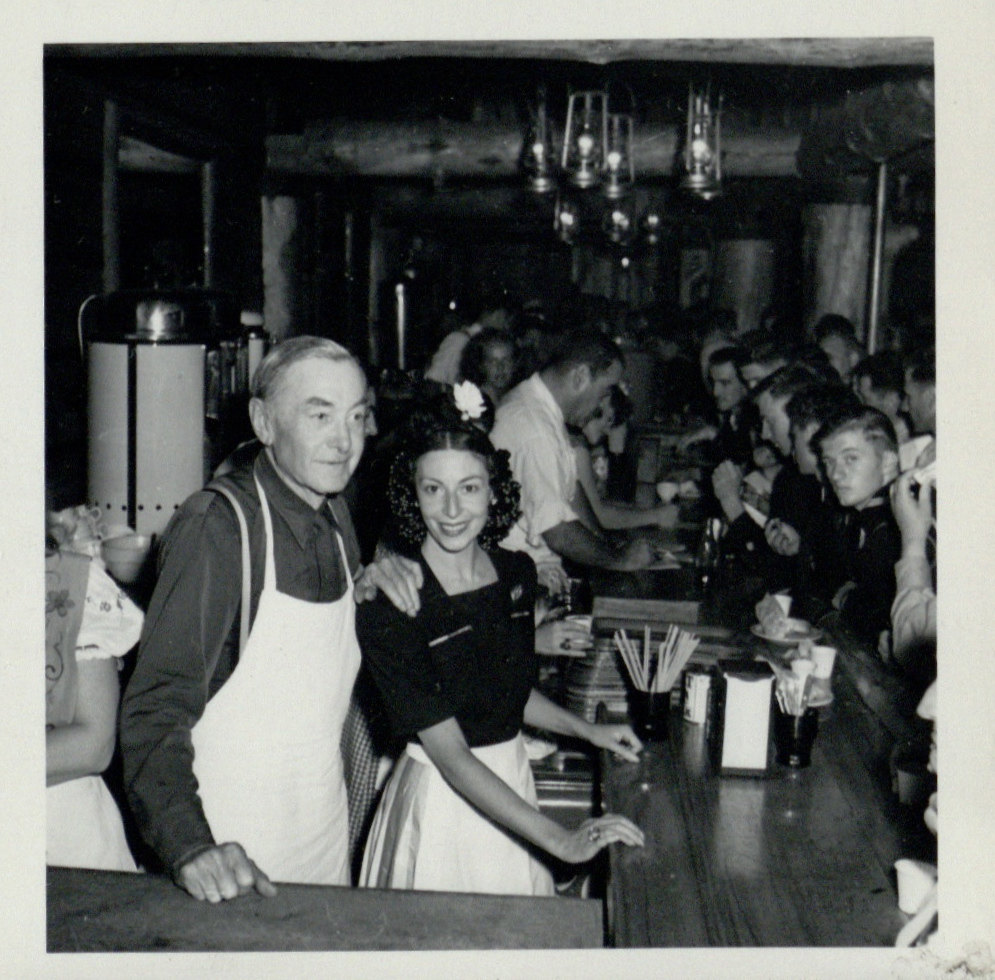
Markova volunteered at Stage Door Canteens throughout the country

Markova volunteered at Stage Door Canteens throughout the country.

Throughout the war, wherever she was performing, Markova made time to visit Stage Door Canteens across the country. The lively nightspots offered wholesome evenings out for enlisted men and women (no officers!), with free food and the company of cheerful volunteers. Some were rather famous, especially at the Hollywood Canteen founded by actors Bette Davis and John Garfield. (“No liquor, but damned good anyway,” reported one sailor.) Markova had a fine time socializing with the American G.I.s: pouring coffee, chatting amiably, and tripping the light fantastic. The ballerina taught ballroom dancing to the servicemen and they in turn showed her how to jitterbug.

Markova jitterbugged with Mickey Rooney at The Hollywood Canteen

To entertain G.I.s, Markova jitterbugged with Mickey Rooney. (Photo from The Hollywood Canteen, an entertaining book by Lisa Mitchell & Bruce Torrence.)

Markova became so adept that one night she entertained the troops by jitterbugging with film star Mickey Rooney; but an over zealous G.I. named “Killer Joe” almost did her in with his exuberant dance moves. Markova loved it all, and so did the countless grateful soldiers who sent her thank you letters and requests for photos. The bone-thin ballerina couldn’t believe anyone would consider her “pin-up girl” material! But Markova managed to touch the soldiers’ lives in a very different way than Hollywood glamour girls like Rita Hayworth.

Markova, the ethereal "pin-up" girl."  © Cecil Beaton

Markova, the ethereal “pin-up” girl.” © Cecil Beaton

Performing for departing or wounded soldiers, Markova’s magical stage presence was an unforgettable experience that lived long in one’s memory. Headlines in many newspapers spoke of her power to enthrall servicemen with classical dance: “Ballet Their Escape From War Jitters,” read one; “Ballet Hailed as War Outlet” read another. And Markova always made time to sell war bonds while on tour, once even appearing on the radio in the window of I. Magnin’s department store.

Markova photographed by friend Carl Van Vechten

Markova photographed by friend Carl Van Vechten

Markova also supported the women that the soldiers left behind. From The Making of Markova: She was willing and able to put herself in the place of average American women whose lives had changed drastically after the Untied States entered the war. Not only were their loved ones drafted, but in a way, they were too. Women who had never held jobs in their lives were needed as factory workers and fill-in employees for all the men now overseas. Many were scared, tired, and feeling neglected. Markova was a Jewish woman at a time when her religion had horrific consequences. She knew what it was like to feel insecure and afraid. And that attitude won her many female fans.IMG_2564
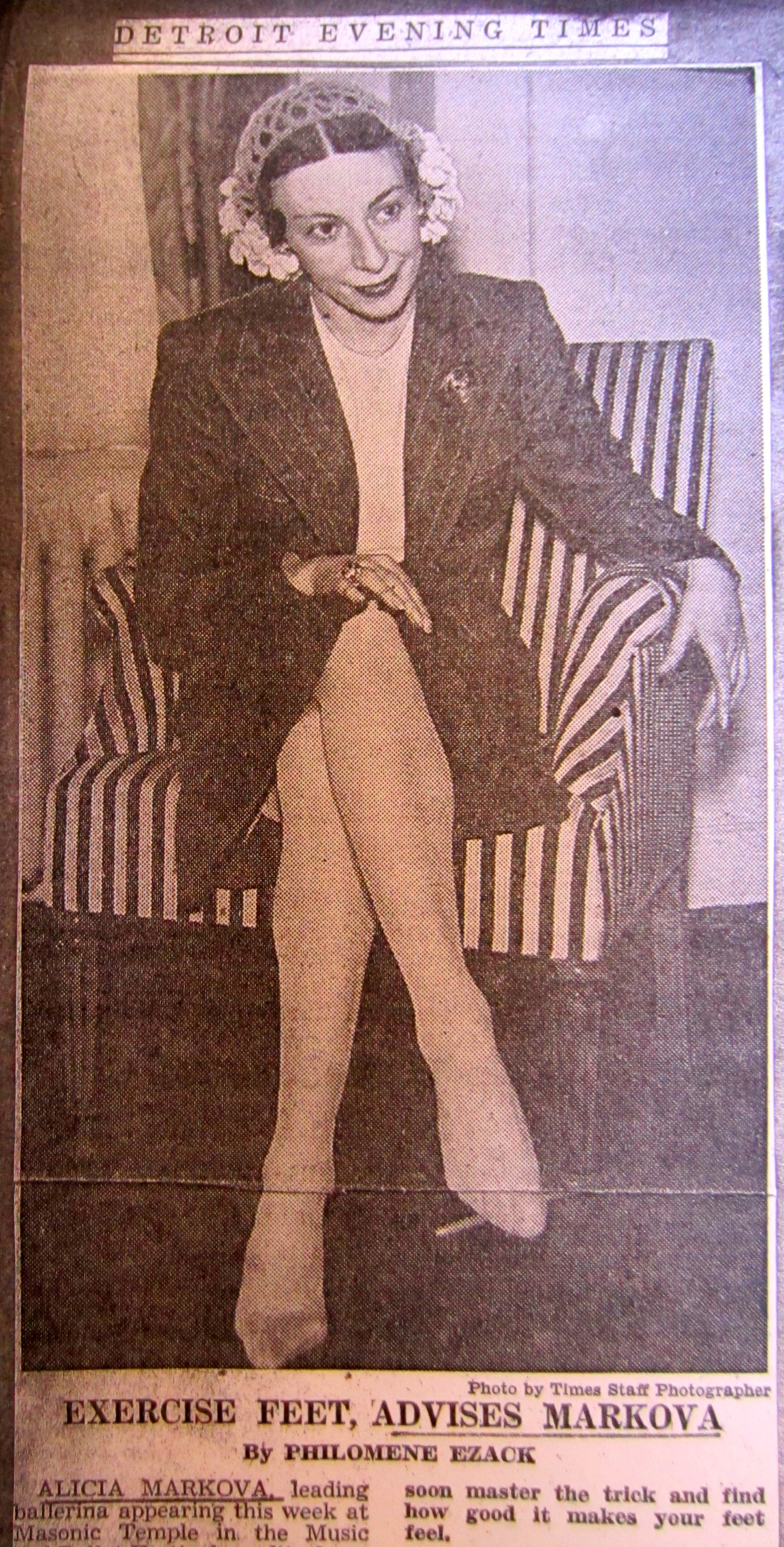
Her interviews were filled with practical beauty and health tips to make women feel better in those tough times. It was hard to feel attractive while doing factory work. Markova knew how happy her sisters were to receive her care packages of lipsticks and nail polish, which they were unable to get in war-torn England. And Markova always reserved some of her war rations for friends back home, sending weekly food packages and much-needed supplies. Thanks to Markova’s parcels of metal hairpins and ribbons, the corps members at London’s Sadler’s Wells Ballet (today’s Royal Ballet) were able to remain”bunheads!”
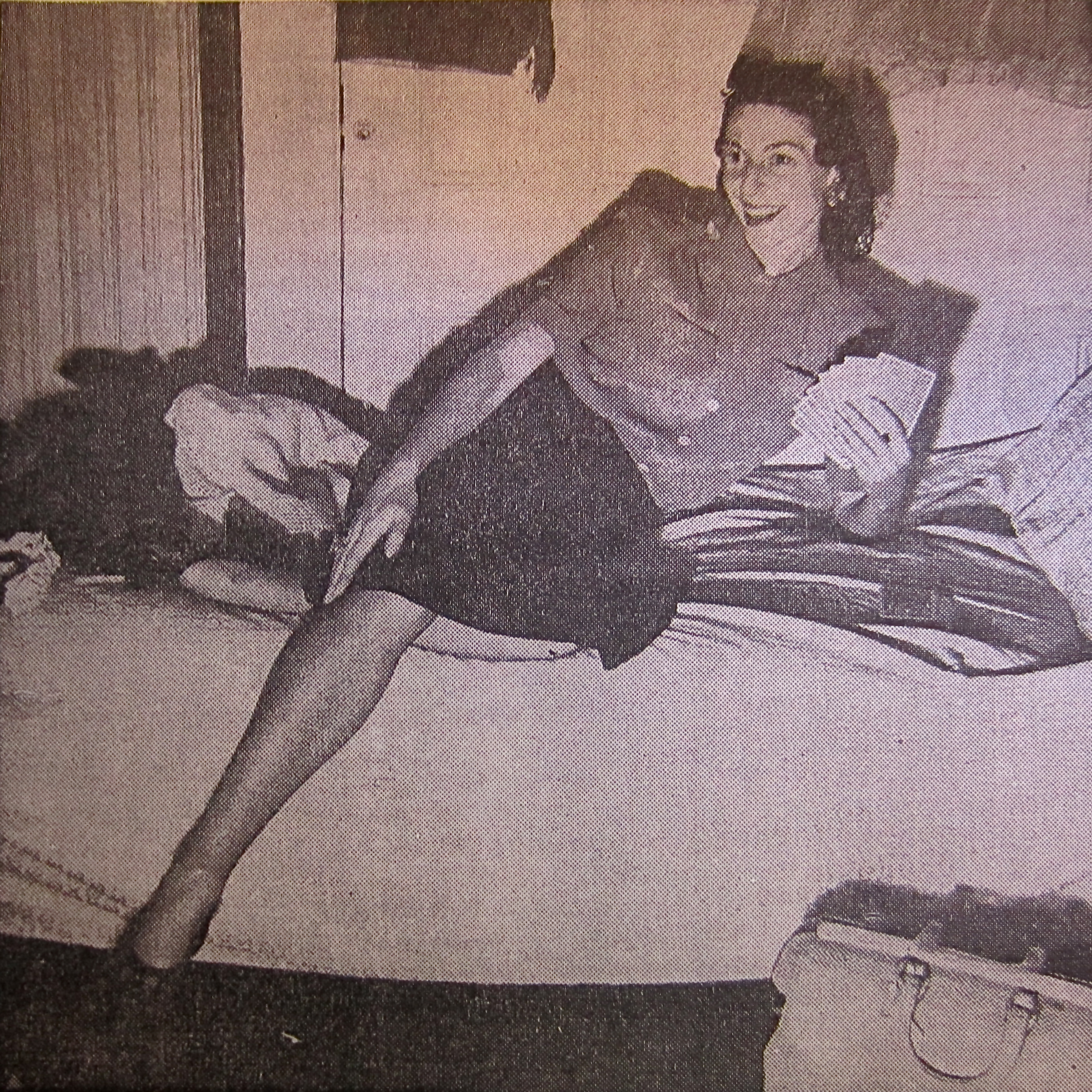
Markova dressed simply for press photos during the War. American women loved her for it.

Markova dressed simply for press photos during the War. American women loved her for it.

Markova also understood that times of war required restraint in appearance. “Miss Markova is not, she insists, a glamour girl,” reported the New York World-Telegram. “She’s a simple, quiet English girl who happens to be a good dancer. Her press agents have asked her to dress more snakily, let down her hair and throw off her natural reticence. But Miss Markova insists that being herself and a good dancer into the bargain is ‘Quite Enough.'”

The trend-setting Markova in 1941

The trend-setting Markova in 1941

The quietly chic dancer still managed to set fashion trends. Out to dinner in 1941 with friends from the Ballet Theatre (today’s American Ballet Theatre), Markova was photographed wearing a beret and fitted houndstooth suit with padded shoulders, nipped in waist, and knee-grazing hemline.

Lauren Bacall in the same outfit three years later in To Have and Have Not.

Lauren Bacall in the same outfit three years later in To Have and Have Not.

Three years later, 19-year-old Lauren Bacall would wear an almost identical outfit in her first film, To Have and Have Not. Though female movie-goers loved the fashions, far more memorable today is Bacall’s repartee with soon-to-be-husband Humphrey Bogart: “You don’t have to say anything, and you don’t have to do anything. Not a thing. Oh, maybe just whistle. You know how to whistle, don’t you, Steve? You just put your lips together and… blow.”

Markova got her share of whistles too, accompanied by standing ovations at curtain calls across the country. The popularity of ballet actually increased during the war years, as famous American dance critic Edwin Denby explained: “Wartime, here as abroad, made everyone more eager for the civilized and peaceful excitement of ballet. More people could also afford tickets. And in wartime, the fact that no word was spoken on the stage was in itself a relief. Suddenly the theaters all over the country were packed.”
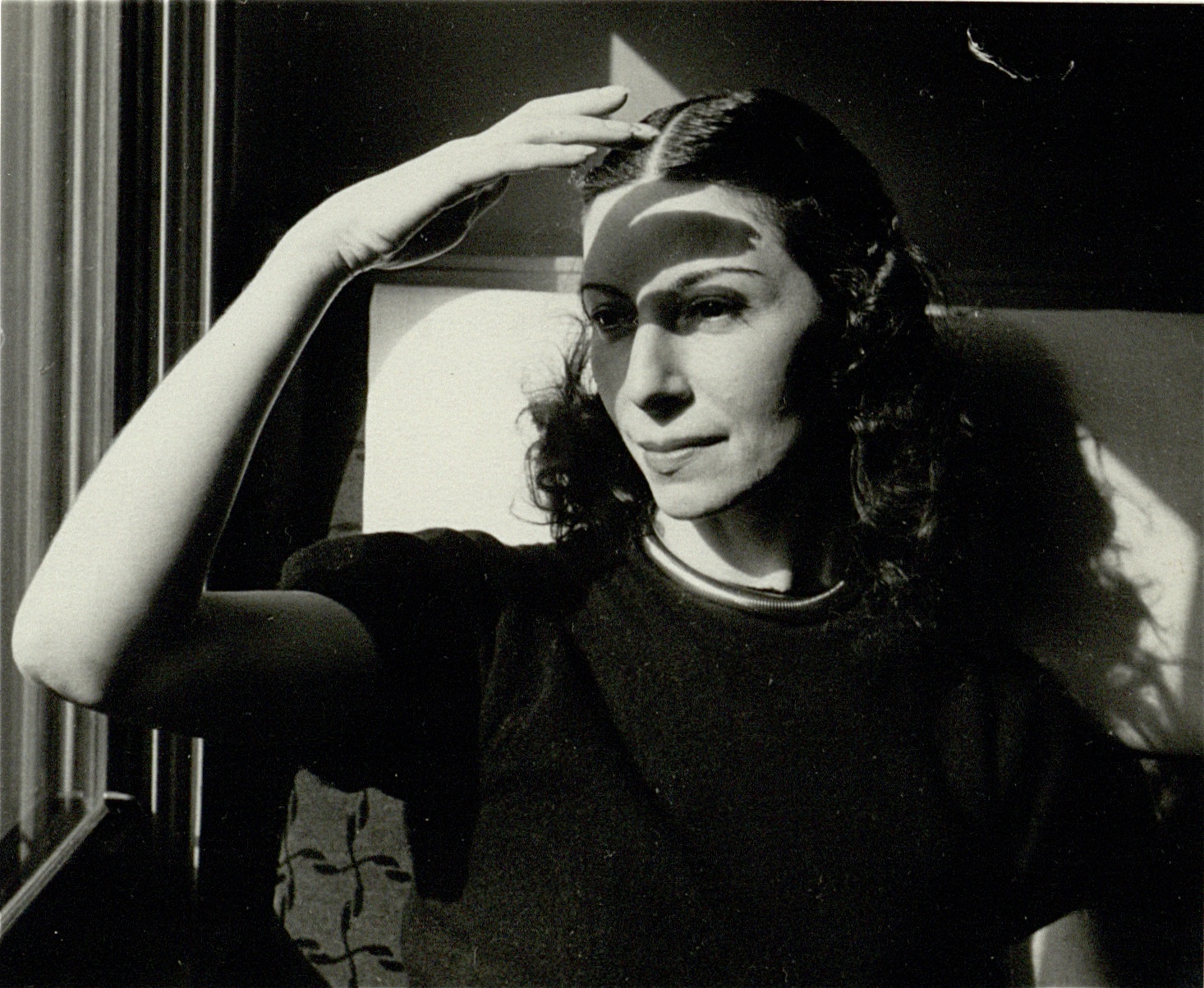
During the war years, Markova practically lived on trains.

During the war years, Markova practically lived on trains.

In order to accommodate audiences nationwide, the company practically lived on trains. Outside of the big cities, performances were often one-night stands held in odd venues such as high school gymnasiums, American Legion auditoriums and Town Halls. As Markova recalled, “Just before we were leaving the Metropolitan (Opera House in New York), the list – the tour list – went up, and I remember looking at the list and I couldn’t understand it because for three whole weeks we never slept in a hotel.” Fortunately Markova was adept at sleeping on trains, and she laughingly remembered inventing “the Army Game” so the company could bathe. The wily “maneuver” involved taking advantage of hotel day rates while the stage crew unloaded and built sets. One dancer would check in to a single suite, with six more sneaking up afterwards. They would tip the maid to bring extra towels and take turns bathing, eating, and napping. It was like a Marx Brothers movie!
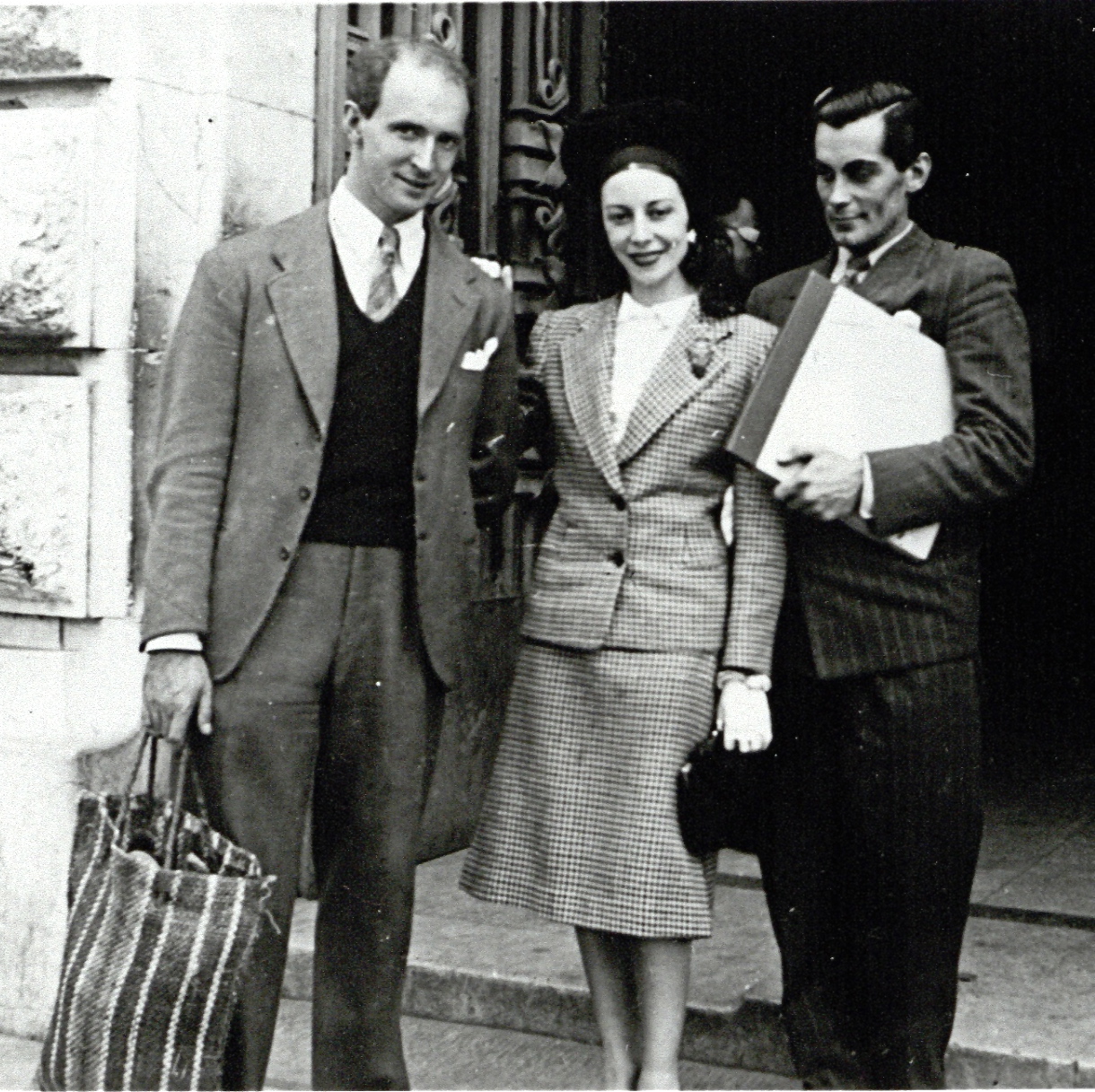
Markova with fellow Ballet Theatre  Brits Hugh Laing (at left) and Antony Tudor (at right).

Markova with fellow Ballet Theatre Brits Antony Tudor (at left) and Hugh Laing (at right).

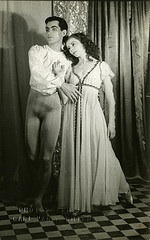
For the Ballet Theatre’s British contingent, mastering new choreography helped take their minds off war worries back home. Antony Tudor’s Romeo & Juliet co-starring Hugh Laing (with Tudor as Tybalt) was one of Markova’s most rewarding roles. Though 32 years old when the ballet debuted in 1943, she had no trouble embodying a love-struck girl of 14.  In preparation, Markova memorized the entire Shakespeare play so she would have Juliet’s thoughts, words, and actions in her head as she danced.

Markova and Hugh Laing in Romeo & Juliet (Life Magazine)

Markova and Hugh Laing in Romeo & Juliet (Life Magazine)

“Her new Juliet,” wrote Edwin Denby in the New York Herald Tribune, “is extraordinary. One doesn’t think of it as Markova in a Tudor part; you see only Juliet. She is like no girl one has ever seen before. She is completely real. One doesn’t take one’s eyes off her, and one doesn’t forget a single move.” Added dance critic Grace Roberts, “For once, there was a Juliet who made Romeo’s quick reactions believable. Her light darting steps barely seemed to touch the ground . . . Markova’s deer like shyness in the first scene, her tragic controlled despair, her exquisite movement of her hand as she wakes up in the tomb scene, are all unforgettable in their subtlety.”

For the transported audience, it was indeed an escape from the worries of the world.

Share this:

  • Tweet
  • Email a link to a friend (Opens in new window) Email
  • More
  • Share on Tumblr
Like Loading...

Alicia Markova: America’s First Nutcracker Suite-heart

11 Monday Nov 2013

Posted by Tina Sutton in Uncategorized

≈ 2 Comments

Tags

Alexandra Fedorova, Alexandre Benois, Alicia Markova, Ballet Russe de Monte Carlo, Ben Stevenson, Boston Ballet, Boston Opera House, George Balanchine, Houson Ballet, Lev Ivanov, Marius Petipa, Mikhail Baryshnikov, Mikko Nissinen, Milorad Miskovitch, Nichlai Legat, Nicholas Sergeyev, Piotr Tchaikovsky, Sugar Plum Fairy, The first Nutcracker, Your Show of Shows

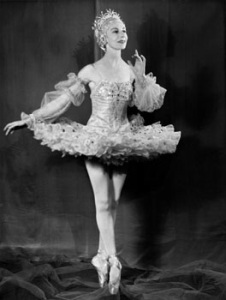
Markova was England and America's first Sugar Plum Fairy

Markova was England and America’s first Sugar Plum Fairy

Alicia Markova had a career filled with firsts: the first British-born – and first Jewish – prima ballerina assoluta, the first to appear on television (in 1932!), the first self-managed “freelance” prima ballerina, and the first to appear on stage in just a leotard without a tutu – quite a scandal in 1925!

But one of Markova’s most charming firsts was introducing England and America to a now-ubiquitous holiday role: The Nutcracker’s Sugar Plum Fairy. In fact, Markova starred in the first-ever full-length Nutcracker outside of Russia, which was presented in London in 1934. As British dance historian and critic P.W. Manchester wrote,

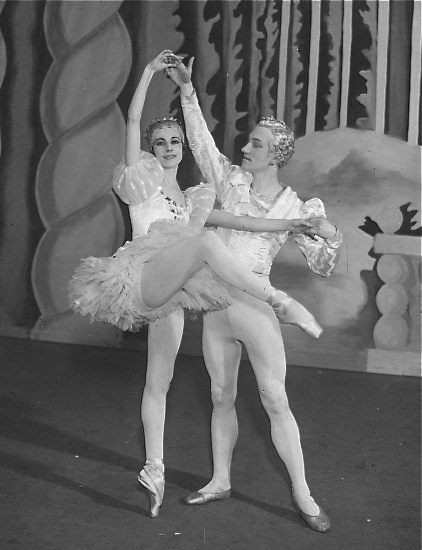
Markova partnered with Stanley Judson in the first full-length Nutcracker outside of Russia. London, 1934

Markova partnered with Stanley Judson in the first full-length Nutcracker outside of Russia. London, 1934

“To most of us, [Markova] was, is, and always will be the one and only Sugar Plum Fairy. She was brittle and sparkling, like the frosted icing on a Christmas cake. There was a crystalline purity in every movement, and she made the most beautiful adagio an unforgettable experience.”

In 1940, Markova would also become America’s first Sugar Plum Fairy, but more about that shortly. How Markova came to master the original 1892 choreography is quite a story in itself, and it begins with a man who would become infamous in Russian ballet circles: Nicholas Sergeyev (1876-1951).

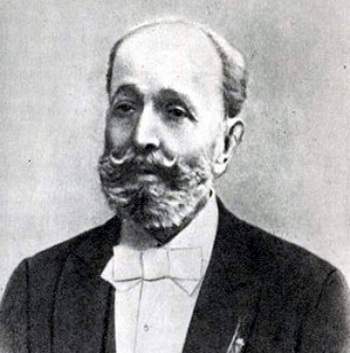
Sergeyev joined the Imperial Ballet in 1894, two years after The Nutcracker (Casse Noisette) premiered at the Maryinsky Theatre in St. Petersburg.

Tchaikovsky

Tchaikovsky

Marius Petipa

Marius Petipa

Set to an enchanting score by Piotr Tchaikovsky, The Nutcracker was a shared choreographic effort by the company’s Premier Maître de Ballet Marius Petipa, and his talented assistant Ballet Master Lev Ivanov (who took over when Petipa became ill). The ballet was not initially popular, falling far short of the success of the Petipa/Tchaikovsky classics The Sleeping Beauty and Swan Lake  (the latter also with contributions by Ivanov), and Petipa’s magnificent reimagining of the French romantic ballet Giselle (Markova’s signature role).

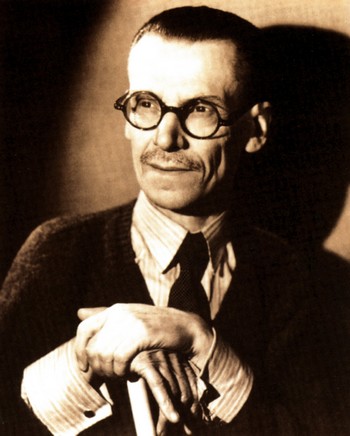
Russian ballet master Nicholas Sergeyev

Russian Imperial Ballet Master Nicholas Sergeyev

To preserve the choreography of all those time-honored works (and countless others), the Imperial Ballet undertook a 20-year documentation project painstakingly executed by a variety of ballet masters. Their detailed notations contained analysis and deconstruction of every step and movement in relation to the musical accompaniment.  When finished, it was a virtual bible of Russian classical ballet. Sergeyev – first a dancer, then a soloist, and finally régisseur-général (chief stage manager) at the company – supervised the tail-end of the documentation. Due to his dictatorial manner, he was unpopular with the dancers, and later, the government. Following the Russian Revolution in 1917, Sergeyev would be forced to flee his homeland – but not before spiriting away the bulk of the invaluable choreographic material.

Needless to say this scandalous theft did not sit well with the Imperial Ballet (later the Maryinsky), causing as much outrage in Russian cultural circles as London’s plundering of the Elgin Marbles elicited in Greece. (FYI: Renamed “The Sergeyev Collection,” the historical ballet papers are now housed in the Harvard University Theatre Collection.)

Markova at the Sadler's Wells (today's Royal Ballet)

Markova, 1930s star of the Sadler’s Wells (today’s Royal Ballet)

While Sergeyev later found employment at Sergei Diaghilev’s grand Ballets Russes, by 1932 he was poor, unemployed, and living in exile in Paris. It was at this time that British balletomanes decided to form a homegrown company. Made aware of Sergeyev’s situation, they asked if he’d consider re-staging the famous Russian classics in London. Sergeyev happily complied and taught the original choreography of Giselle, The Nutcracker, and Swan Lake to the reigning star of the Sadler’s Wells Ballet (today’s Royal Ballet), Alicia Markova.

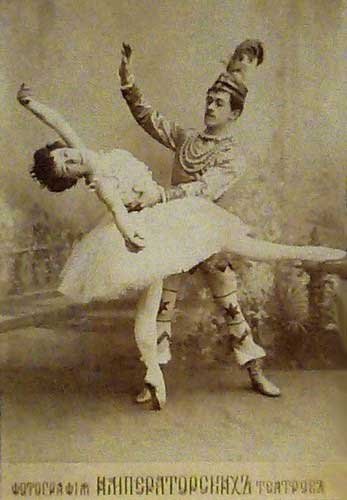
Nikolai Legat starred in the original Nutcracker

Nikolai Legat starred in the original Nutcracker in Russia, 1892

Markova’s Sugar Plum Fairy benefited from another master teacher as well: Nicholai Legat. The prolific choreographer and former Imperial Ballet dancer had starred in the Russian premiere of the Nutcracker in 1892. As he was living in London, Legat agreed to give Markova private lessons in mastering the extremely difficult original classical variations in the last act. “Some of us would call it a ‘killer’ under our breath,” Markova explained. “There are certain steps in that, which today are never done in the last movement, such as a double gargouillade.”

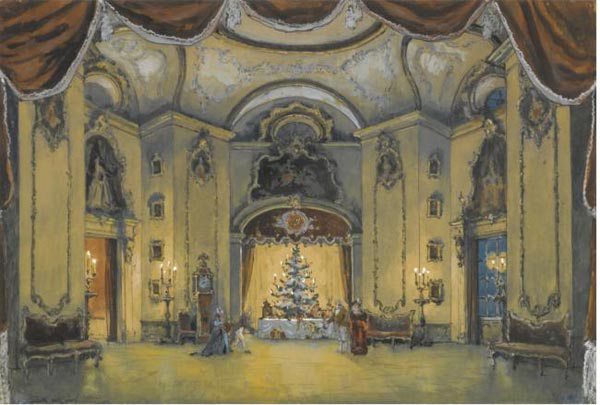
By 1939, Markova was a star ballerina with the Ballet Russe de Monte Carlo and performing throughout Europe and the United States. The following year, Alexandra Fedorova  (a former Maryinsky dancer and the sister-in-law of famed choreographer Michel Fokine) was asked to choreograph a shortened version of the Petipa/Ivanov Nutcracker for American audiences. The sets and costumes were designed by Alexandre Benois, a former Ballets Russes favorite living in France. As the 14-year-old Markova had been the youngest-ever soloist at the Ballets Russes, she greatly enjoyed the reunion.

Alexandre Benois set for Nutcracker opening scene

Benois set for Nutcracker opening scene

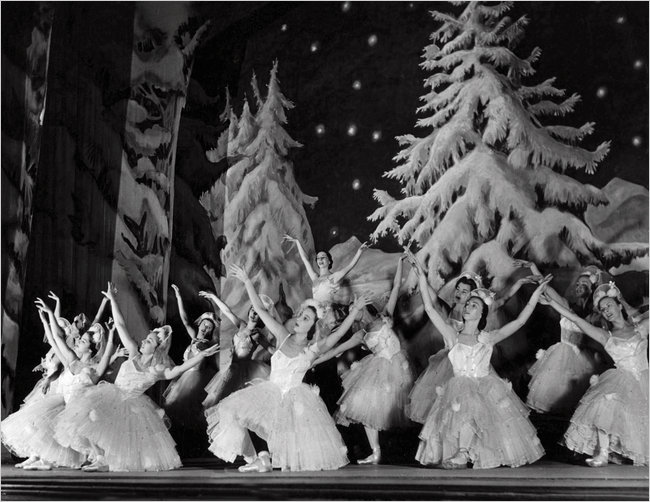
The Nutcracker premiered at the Boston Opera House in the fall of 1940, with Markova mesmerizing audiences as the country’s first Sugar Plum Fairy. As Jack Anderson explained in his entertaining book The One and Only: The Ballet Russe De Monte Carlo: “… the Ballet Russe Nutcracker was a truncated version capable of serving as one item on a mixed bill. A brief first scene showed the Christmas party, after which Clara fell asleep and . . . journeyed immediately to the snow country and the land of sweets. Yet this was the first Nutcracker most American balletgoers had ever seen and it was extremely popular on tour.”

Markova starring in the Ballet Russe de Monte Carlo's Nutcracker Suite

Markova starring in the Ballet Russe de Monte Carlo’s Nutcracker 

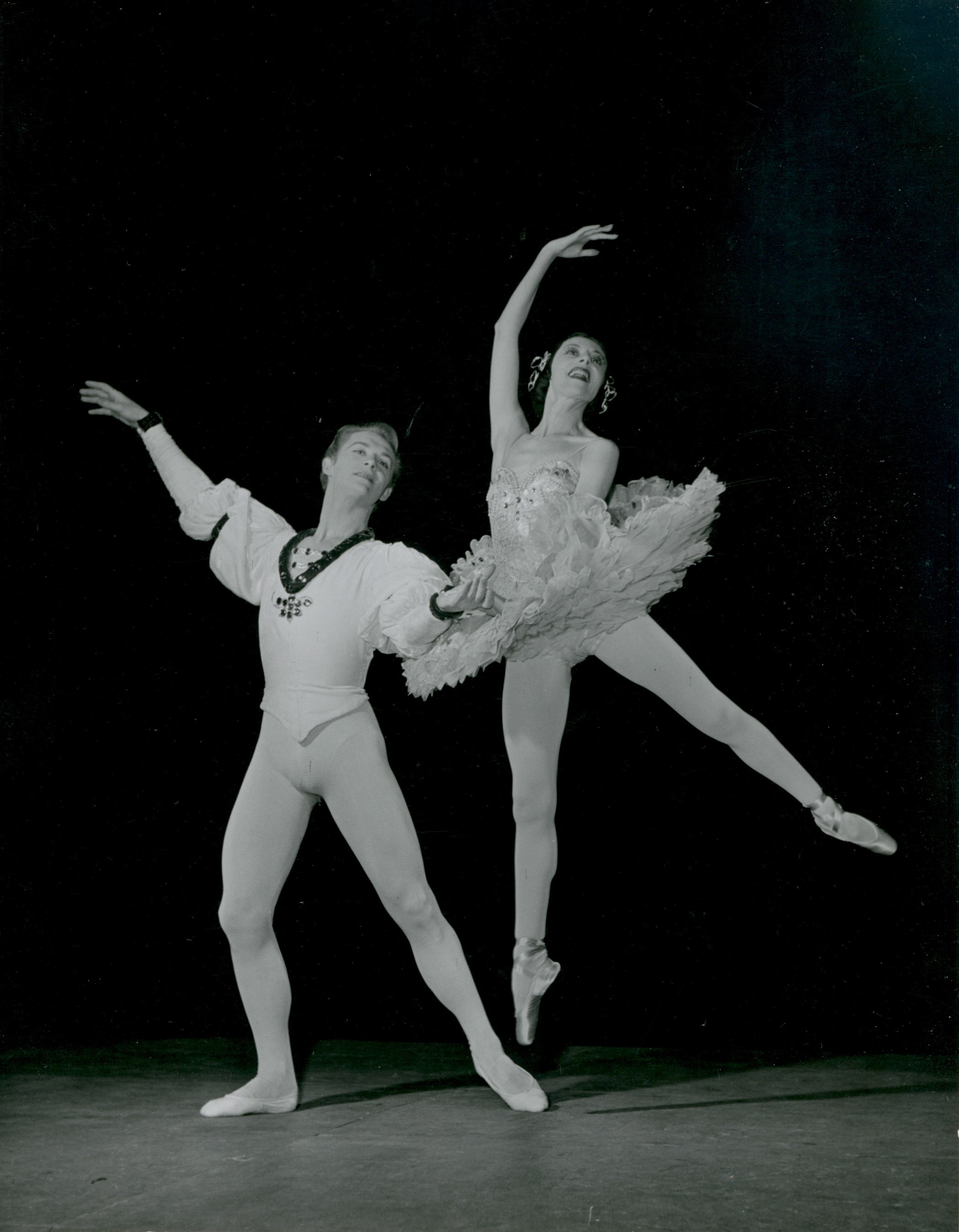
Markova, age 43,  dancing the Sugar Plum Fairy with the 25-gar-old Milorad Miskovitch

Markova, age 43, dancing the Sugar Plum Fairy with the 25-year-old Milorad Miskovitch

While Markova’s Giselle was always a must-see night at the ballet, her Sugar Plum Fairy enchanted audiences throughout her entire lengthy career. In 1952, she performed the role for an audience of 30 million when she danced the snowflake scene on the hugely popular TV program Your Show of Shows, starring Sid Caesar and Imogene Coca. And the Sugar Plum Fairy was part of her repertoire the following year, when the 43-year-old bewitched audiences throughout Great Britain and Ireland partnered with the sensational Milorad Miskovitch (18 years her junior!).

Ben Steveson's Nutcracker for the Houston Ballet, photo by Amitava-Sarkar

Ben Stevenson’s Nutcracker for the Houston Ballet (photo by Amitava-Sarkar)

In 1955, 18-year-old Ben Stevenson got the thrill of his young life performing scenes from The Nutcracker with Markova in London’s West End. After an illustrious dancing career in England (including stints at The English National Ballet and the Royal Ballet), Stevenson became a very successful choreographer and artistic director – a position he held at the Houston Ballet from 1976 to 2003. The talented Brit is credited with developing the small regional Texas troupe into an internationally acclaimed company. I had the pleasure of speaking at the wonderful Houston Ballet last week (thanks to the delightful Maxine Silberstein, Hilda Frank, and Chase Cobb) and meeting many of the marvelous dancers and students. This being November, the company is about to celebrate its 26th season performing Stevenson’s Nutcracker choreography, described in the press as “impeccably beautiful, alluring, and altogether magical from the opening to the close.”

Baryshnikov's 1977 Nutcracker remains an annual viewing favorite

Baryshnikov’s 1977 Nutcracker remains an annual viewing favorite

Growing up in New York, my introduction to The Nutcracker was George Balanchine’s sumptuous production for the New York City Ballet. First performed on February 2, 1954, this resplendent annual treat made me a ballet fan for life. (And Tina the Ballerina sounded so lovely when I was 5 years old.) As an adult, I felt the same magic while watching Mikhail Baryshnikov fly through the air in his own lauded Nutcracker for the American Ballet Theatre. Filmed in 1977, it is one of the mostly widely viewed Nutcrackers in the world.

Even today, The Nutcracker never ceases to enchant me. Living in Boston, I have the pleasure of attending the internationally acclaimed Boston Ballet. Last year, the company’s longtime Artistic Director Mikko Nissinen spearheaded an entirely re-designed, re-choreographed Nutcracker that simply dazzled with breathtaking new sets and glorious costumes by the award-winning designer Robert Perdziola. And like Markova’s very first Nutcracker in the United States, the company performs at the Boston Opera House. (O.K. – it’s a replacement for the original theatre, but why quibble?)

Alicia Markova - America's Nutcracker Suite-Heart © Maurice Seymour

Alicia Markova – America’s Nutcracker Suite-heart © Maurice Seymour

Share this:

  • Tweet
  • Email a link to a friend (Opens in new window) Email
  • More
  • Share on Tumblr
Like Loading...

What’s in a Name? Fame!

15 Tuesday Oct 2013

Posted by Tina Sutton in Uncategorized

≈ Leave a comment

Tags

Alastair Macaulay, Alicia Markova, American Ballet Theatre, Anton Dolin, Antony Tudor, Ballets Russes, Charles Payne, Cyd Charisse, Fred Astaire & Ginger Rogers, Gene Kelly, German Sevastianov, Gillian Murphy, Irina Baronova, Léon Bakst, Leonide Massine, Lydia Sokolova, Marc Chagall, Margot Fonteyn, Nora Kaye, Olga Spessitseva, Sergei Diaghilev, Sol Hurok

Alicia Markova, age 14, at Diaghilev's Ballets Russes

Alicia Markova, age 14, at Diaghilev’s Ballets Russes

“Who would pay to see Marks dance?” Sergei Diaghilev asked the youngest-ever soloist at his famed Ballets Russes. She was Lilian Alicia Marks, a tiny and timid British girl, just turned 14. She knew what was coming next. Ballet was a world of classically-trained Russians: Pavlova, Nijinsky, Karsavina, Danilova. So Diaghilev rechristened his little dance prodigy Alicia Markova. Lily Alicia was actually disappointed. It was only a few letters tacked onto her last name. Why not the more dramatic Olga Markova, in honor of her hero, ballet legend Olga Spessitseva? But uh-LEE-see-ah MAR-kova it would be.

“What’s in a name?” asked Shakespeare in Romeo & Juliet. “That which we call a rose by any other would smell as sweet.” But does a delivery of rosa berberifolias fill you with joy? The flower’s latin name sounds more like a skin rash than a romantic bloom. So with all due deference to the Bard, there’s a lot in a name, especially for performers.

Eugene Curran and Tula Ellice

Eugene Curran and Tula Ellice: not ideal marquis names

One of the most popular dance couples of all times might have had trouble enticing American movie audiences as “McMath & Austerlitz,” a name more befitting an accounting firm. Much catchier is Rogers & Astaire. And Eugene Curran Kelly smartly went with the jauntier Gene. (Fun fact: Markova and Gene Kelly liked to play charades together.) Then there’s Kelly’s impossibly long-limbed partner Cyd Charisse. Would she have ever seen her name up in lights if she stuck with Tula Ellice Finklea?

In a recent New York Times article, the paper’s dance critic Alastair Macaulay wondered if today’s talented American ballerinas would be given more roles if they too considered changing their names:

Gillian Murphy at ABT

Gillian Murphy dancing with American Ballet Theatre

“For many people, a ballerina must also be an embodiment of the Old World,” writes Macaulay. “Today that opinion seems shared by American Ballet Theater, whose idea of ballet theater often seems none too American. In its eight-week season, which just concluded at the Metropolitan Opera House, only 2 of its 11 principal women were from this country. The younger of them, Gillian Murphy, is reaching the zenith of her powers; but would she be more revered if — following the practice of Hilda Munnings (Lydia Sokolova), Lilian Alicia Marks (Alicia Markova) and Peggy Hookham (Margot Fonteyn) — she changed her name to Ghislaine Muravieva and claimed to come from Omsk?”

Markova starred with the American Ballet Theatre (then called just Ballet Theatre) in its start-up years in the early 1940s. Previously, she had made her stellar reputation by pioneering British ballet at a time only Russian companies were considered true ballet artists. When interviewed by a London newspaper in 1933, Markova posed the question, “Are we becoming ballet-minded?” As excerpted in The Making of Markova: 

Lily Marks and Patte Kay

Lily Marks and Patte Kay: better names for vaudeville than ballet

“British Ballet has had to work hard, but I think we have come through,” Miss Markova told the Daily Sketch. “It is becoming so popular in theatres and cinema houses that thousands of British girls are going into training. Soon we shall be able to leave off our ‘Russian’ names – and be just plain Jones and Smith,” laughed Miss Markova. “I got my early training with Diaghileff, and, of course, he wouldn’t let us have any but Russian names.” . . . It made all the difference, though, no doubt, the dancing was the same.

Lest anyone think this was entirely a female prejudice, male dancers also changed their names. Markova’s most frequent partner, Anton Dolin, was christened Francis Patrick Chippendall Healey-Kay. When starting to dance professionally, he took the first name Anton, after Chekhov, with Diaghilev suggesting Patrikayev for his last. But after a few years, Patte, as everyone called him, changed it once again, this time to Dolin, which stuck. Even celebrated dancer/choreographer Léonide Massine, who was Russian by birth, got a name change courtesy of Diaghilev. The impresario thought Leonid Fyodorovich Myasin too difficult to pronounce.

Jewish Ballets Russes designer Léon Bakst painted by fellow Jewish artist Modigliani

Ballets Russes designer Léon Bakst changed his name to sound less Jewish. Here painted by fellow Jewish artist Amedeo Modigliani.

The illustrious Ballets Russes artist Léon Bakst changed his Russian name for a very different reason. Born Lev Samoilovich Rosenberg, he “renamed himself Léon Bakst after moving to St. Petersburg, where he quickly established a reputation both as a painter and as a sophisticated and much revered set and costume designer,” explains author Jonathan Wilson in his 2007 biography of Marc Chagall, one of Bakst’s pupils. “Bakst, who had worked hard to erase at least some elements of his Jewishness – had converted to Lutheranism in 1903 so he could marry a wealthy Christian – but converted back seven years later after the marriage fell apart.” (The Jewish Chagall would also change his name to better fit in with his new artistic home in Paris. Thus Moishe Shagal became Marc Chagall.)

Many Jewish artists and performers experienced virulent anti-Semitism in Russia and Europe throughout the early-to-mid 20th century, including Alicia Markova, who always remained fiercely open and proud of her religion.

Ballet Theatre's unpopular business manager, German Sevastianov

Ballet Theatre’s ruthless business manager, German Sevastianov

When Markova signed with New York’s Ballet Theatre in 1941, German Sevastianov was the newly named business manager brought on by booking impresario Sol Hurok to “Russify” the company. As Ballet Theatre’s then managing director Charles Payne recalled in his fascinating book American Ballet Theatre, it was like the “Russian Occupation,” all part of Hurok’s master plan for billing the American company as “The Greatest in Russian Ballet.”

From The Making of Markova: “Sevastianov saw to it that dancers who were formerly principals would now be demoted to soloists,” writes Antony Tudor biographer Donna Perlmutter. “He cast a jaundiced eye on the likes of Miriam Golden, Nora Kaye, Muriel Bentley, David Nillo and more – most of them Jews – and brought in dancers, along with Baronova (Sevastianov’s wife, prima ballerina Irina Baronova) from the Ballet Russe [de Monte Carlo]. It was said that he was anti-American, anti-Jewish, and anti-Tudor.”

Markova as Giselle at Ballet Theatre, 1941

Markova as Giselle at Ballet Theatre, 1941

But when it came to Markova, Sevastianov had no choice. The “Jewess” was to share the limelight as principal ballerina with his wife Irina.

She was just too big a box-office draw to ignore.

Ironically, despite being anti-Semitic, Sevastianov would change his own name due to American prejudices against Germans at the outbreak of World War II. So “German” Sevastianov became the friendlier “Gerry.” But another white lie would force him to actually defend the Jewish cause on the front lines, according to Ballet Theatre’s Charles Payne. In order to obtain Baronova’s parents’ permission for the couple to marry – Irina was only 17, and Sevastianov nearly twice her age –  he had claimed to be born in 1906, rather than 1904, as 29 sounded much younger than 31. Sevastianov even maintained the falsehood on his American passport. Those few years unfortunately made him eligible for the draft in 1944, though he was actually past the age 35 cut-off. But when “Gerry” informed the draft board of his real birth year, he was offered two options: spend the war years in jail for perjury, or serve the country. Suddenly the armed forces didn’t seem so bad.

Share this:

  • Tweet
  • Email a link to a friend (Opens in new window) Email
  • More
  • Share on Tumblr
Like Loading...

Mastering Stravinsky: Markova’s Rite of Passage

23 Monday Sep 2013

Posted by Tina Sutton in Uncategorized

≈ 3 Comments

Tags

Alicia Markova, American Ballet Theatre, Ballet of the Elephants, Ballets Russes, Bronislava Nijinska, Circus and the City: New York 1793-2010, Discovery.com, George Balanchine, George Benjamin, Henri Matisse, Igor Stravinsky, Matthew Wittman, Picasso, RIngling Bros. and Barnum & Bailey Circus, Sergei Diaghilev, The Firebird, The Jewish Museum, The Rite of Spring, Vaslav Nijinsky, Vera Stravinsky

Stravinsky & Nijinsky shocked the world with The Rite of Spring

Stravinsky & Nijinsky shocked the world with The Rite of Spring

No one said breakthrough art is easy, either for the creator or the initial audience. When Igor Stravinsky composed The Rite of Spring (Le Sacré de Printemps) for the Ballets Russes 100 years ago, it spearheaded a revolution in contemporary music – and a revolt in the theatre. Ballet patrons physically rioted when faced with the cacophonous score accompanying Vaslav Nijinsky’s equally provocative choreography. Though police were called in, impresario Sergei Diaghilev couldn’t have been happier. The more his ballet company shocked, the more press he got, and the more tickets he sold.

“No composer since can avoid the shadow of this great icon of the 20th century, and score after score by modern masters would be unthinkable without its model,” British composer George Benjamin wrote of Stravinsky in The Guardian this past May. “This, in a way, is cubist music – where musical materials slice into one another, interact and superimpose with the most brutal edges, thus challenging the musical perspective and logic that had dominated European ears for centuries.”

Picasso's cubist cardboard costume for Parade (1917)

Picasso’s cubist cardboard costume for Parade (1917)

Diaghilev was a genius at choosing artists who challenged the status quo. Who but the avant-garde Russian would have asked Picasso to create cubist ballet costumes – out of stiff cardboard no less!

A surreal Bronislava Nijinska at the Ballets Russes

A surreal Bronislava Nijinska at the Ballets Russes

– or applaud Bronislava Nijinska’s startling surrealist make-up for Léonide Massine’s Kikimora in 1917?

When Diaghilev invited Alicia Markova to join the Ballets Russes as its youngest-ever soloist in 1923, she was a shy, unsophisticated 14-year-old. (See photo below.)

Alicia Markova at age 14, the newest member of the Ballets Russes (1923)

Alicia Markova at age 14, the newest member of the Ballets Russes (1924)

Her first starring role was in Le Chant de Rossignol (The Song of the Nightingale), with choreography by George Balanchine – his first major commission for Diaghilev – and music by Igor Stravinsky. While the tiny dance prodigy had no problems mastering Balanchine’s complicated and supremely athletic dance sequences, Stravinsky’s music was another matter. As Markova reminisced in The Making of Markova: I remember the very first rehearsal with Balanchine. I started to cry and they said what’s the matter? I said I’m never going to be able to learn this. You know, this isn’t music to me. What am I to do? And Stravinsky was so wonderful. . . . He said, “There’s no worry. I’ll be there for all the rehearsals, and I will conduct, [unheard of for the celebrated composer!] and as long as I’m here, you mustn’t worry, but there’s one thing you have to promise me . . . You’ve got to learn the scores by ear. You must learn the instrumentation, orchestration and everything by ear,” he said, “and then you’ll never have any worry for the rest of your life.” And he was so right.

Markova's star-maker Sergei Diaghilev, with her music teacher Igor Stravinsky

Markova’s star-maker Sergei Diaghilev, with her music teacher Igor Stravinsky

Not only did Stravinsky become Markova’s music instructor, but he accompanied her, Diaghilev, and Henri Matisse (the lucky Alicia’s art teacher!) to the studio of Nightingale costumier (and former ballet dancer) Vera de Bosset Soudeikine, who incidentally, would become Stravinsky’s second wife. Matisse was responsible for Markova’s costume design, with Mme. Soudeikine charged with bringing his creation to life.

Stravinsky happily married to  second wife Vera Soudekina, both subjects of a fascinating new play Nikolai and the Others at Lincoln Center last spring

Stravinsky happily married to second wife Vera de Bosset Soudeikine, both subjects (along with Balanchine), of Richard Nelson’s fascinating play Nikolai and the Others, performed at Lincoln Center last spring.

When Matisse announced his plan to cover Markova’s little girl hair bob with a white bonnet trimmed in osprey feathers – an extravagantly expensive trim – the budget-minded Diaghilev emphatically cried ‘No!” As Markova finishes the story in The Making of Markova: But please Sergevitch,” pleaded Matisse, “the little one needs them round her face to soften the hard line of the bonnet and make her a little bird,” protested Matisse. “No ospreys,” repeated Diaghilev. Then Stravinsky entered the argument. He too thought they were necessary, but Diaghilev was adamant and refused, and unexpectedly Stravinsky turned to Matisse and said, “Henri, we buy the ospreys between us, 50-50, yes?” “Yes!” echoed Matisse, and so I had my ospreys, and how I guarded them, as if they were gold.

Balanchine and Stravinsky collaborated on a gargantuan task 1942 . . .

Balanchine and Stravinsky collaborated on a gargantuan task 1942 . . .

While Markova never again had trouble with Stravinsky’s unique musical phrasing, others were not so lucky, as when the composer collaborated again with Balanchine in New York in 1942. The mystified dancers? Pachyderms at the Ringling Bros. and Barnum & Bailey Circus! As Matthew Wittman explained in Circus and the City: New York 1793-2010: “‘The Ballet of the Elephants’ production was an attempt by John Ringling North to bring high culture into the circus and featured fifty elephants in pink tutus accompanied by female dancers. The rhythm changes in Stravinsky’s Circus Polka proved difficult for the elephants to grasp, and it was only performed intermittently.”

Apparently circus elephants do forget when it comes to dancing to Stravinsky

Apparently circus elephants do forget when it comes to dancing to Stravinsky

Evidently pigeons and songbirds don’t care much for Stravinsky’s dissonant compositions either, according to a research study posted on Discovery.com. The classical cadences of Bach are more to their liking. Fish, it appears, are musically non-judgmental – if listening to either composer’s music results in more food.

The very human Markova, however, was an ardent and vocal Stravinsky fan – of both the man and his exhilarating music. The two remained lifelong friends and visited each other often in the United States where Stravinsky moved with Vera during World War II.

In 1945, Markova starred in The Firebird at Ballet Theatre, with music by Stravinsky,

Markova starred in The Firebird at Ballet Theatre (1945), with music by Stravinsky

Markova asked Stravinsky to compose music for her Broadway debut – to which he happily consented – and she delighted starring at the Ballet Theatre (today’s American Ballet Theatre) in the 1945 revival of The Firebird, the composer’s first commission for the Ballets Russes back in 1910. (Though Michel Fokine choreographed the ballet for Anna Pavlova, she refused the role proclaiming Stravinsky’s music “noise!”) Marc Chagall (currently the subject of a illuminating new exhibit at The Jewish Museum in New York) designed Markova’s breathtaking Firebird costume, which was covered in shimmering gold dust and topped with a dramatic headdress of bird of paradise feathers. One wonders if osprey plumes were still just too expensive!

Share this:

  • Tweet
  • Email a link to a friend (Opens in new window) Email
  • More
  • Share on Tumblr
Like Loading...

Ballet in a Boxing Ring? It was a knockout!

03 Tuesday Sep 2013

Posted by Tina Sutton in Uncategorized

≈ 2 Comments

Tags

"Aphrodisiac Coat", Alicia Markova, Anton Dolin, Ballet, Ballets With a Twist, Battle of Manilla, Beatrice Lillie, Benny Goodman, Bert Lahr, Billy Rose, Catherine Zehr, Cyndi Lauper, Dance Informa, Jacob's Pillow, Leah Gerstenlauer, Nico Malvaldi, Queens Public Library, Salvador Dalí, Shelly Ng, Stage Door Canteen, Stephanie Woodard, The Seven Lively Arts, True Colors Fund, XL NIghtclub

Markova dancing outdoors at Jacob's Pillow, 1941

Markova dancing outdoors at Jacob’s Pillow, 1941

She may have been honored as only the third prima ballerina assoluta in history, but Alicia Markova was no elitist. While she often graced the stages of the grandest theaters and opera houses in the world, the down-to-earth dancer was just as happy pirouetting in an open field or baseball stadium (yes, baseball stadium!) if it meant bringing ballet to a new audience.

At Jacob’s Pillow, Markova mesmerized audiences in a rustic outdoor amphitheater with the top ticket price a very affordable $1.50. In the Philippines, she performed in a barren outdoor cinema on a stage made of canvas-covered lemonade cases. (The scenic backdrop was a crazy quilt of old grain sacks, beautifully embellished with fragrant tuberose flowers.) And during World War II, she danced in a cavernous airport hangar near a San Diego military hospital. Her enthralled audience was composed entirely of injured soldiers laid out on white stretchers as far as the eye could see.

Markova and partner Anton Dolin pose in war-torn Manila, 1948

Markova and partner Anton Dolin pose in war-torn Manila, 1948

But perhaps the strangest outdoor “stage” was during Markova’s visit to war-torn Manila, a city in ruins after the Japanese bombing and shelling raids during the Battle of Manila in 1945. Evidence of that destruction can be seen in this photo of a decimated historic building where Markova and Anton Dolin posed in ceremonial dress presented to the pair by the grateful Filipinos.

After dancing to rapturous audiences at the Manila Opera House (amazingly still standing), Markova wanted to add one additional performance for the stationed army soldiers and local residents who couldn’t afford tickets. As I wrote in The Making of Markova:

Markova could mesmerize audiences anywhere.  © Baron

Markova could mesmerize audiences anywhere. © Baron

“The fee would be just one dollar. Markova and Dolin would dance for free and donate all proceeds to the local symphony orchestra, which was desperately in need of new instruments. So many tickets were sold that the only venue big enough to hold them all was the local baseball stadium. Someone had the bright idea of bringing a boxing ring to the arena for a stage, and Doris [Markova’s sister and manager] went to work on the lighting. With a large contingent of U.S. Army soldiers in attendance, several officers volunteered their searchlights as follow spots. The evening was completely magical.”

Markova jokingly referred to herself and Dolin as "pioneers of arena ballet." Here shown rehearsing in 1945.

Markova jokingly referred to herself and Dolin as “pioneers of arena ballet.” Here shown rehearsing in 1945.

Even indoors, Markova often danced in some rather unorthodox venues. She dazzled a sold-out stadium of 6000 at London’s Empress Hall at Earl’s Court, home to ice-dancing extravaganzas and ice-hockey matches. (She had to contend with a bitterly cold stage covering the ice!) She filled all 9000 seats nightly at North London’s Harringay Stadium, which more often played host to greyhound races and the circus. Markova laughingly recalled the smell of horses and elephants around every corner!

© Hirschfeld

© Hirschfeld

And she agreed to co-star in a Billy Rose Broadway spectacular called The Seven Lively Arts (caricatured at left by Al Hirschfeld), which also featured Benny Goodman, Beatrice Lillie and Bert Lahr (known best as the Cowardly Lion in the Wizard of Oz). Partnered with Dolin, Markova thought performing in a Variety Show on Broadway (1944-45) would bring in a whole new audience for ballet. As always, she was right.

Dancer Leah Gerstenlauer as "Absinthe" (photo by Nico Malvaldi)

New York dancer Leah Gerstenlauer as “Absinthe” (photo by Nico Malvaldi)

Recently, I had the pleasure of being interviewed by New York dancer Leah Gerstenlauer for Dance Informa magazine. When I asked Leah about her own career, I was fascinated by her association with Marilyn Klaus’s imaginative Ballets With a Twist. Last year the company got rave reviews for its enterprising marriage of unorthodox ballet venue – the buzzy Manhattan XL Nightclub/Cabaret/Lounge – with like-themed “intoxicating” choreography – Klaus’s Cocktail Hour. “Conceived and choreographed by critically acclaimed dance-maker Marilyn Klaus, each piece is inspired by a well known cocktail and brings one of the highest art forms to the masses in a fresh playful way,” commented Shelly Ng, for WPIX 11 TV.

“Leah Gerstenlauer, [above right], was the latest specter flitting through the shadows of ‘Absinthe,’ a tribute to the green wormwood-flavored liquer associated with hallucination, addiction, and 19th century Paris,” wrote Stephanie Woodard for The Huffington Post.

Cyndi Lauper performed with Ballets With a Twist

Cyndi Lauper

“Klaus blasts the boundaries between high art and entertainment. . . . We have seen the future of dance, and it is fun!” Cyndi Lauper, the “Girls Just Want to Have Fun” gal herself, joined Ballets With a Twist for a charity event at XL to benefit her True Colors Fund.

The award-winning Ballets With a Twist

The award-winning Ballets With a Twist

And a recent Ballets With a Twist performance at the Queens Public Library in Flushing was an equally engaging venue – one Markova would have undoubtedly delighted in. She would also have been wowed by the wonderfully creative production, melding ballet with mainstream wit and avant-garde Surrealism.

And speaking of Surrealism, the ingenious cocktail dance costumes by talented designer Catherine Zehr reminded me of another fanciful drink-themed outfit created by legnendary artist Salvador Dali, the subject of my last blogpost.

Salvador Dali's creme de menthe "aphrodisiac jacket"

Salvador Dali’s creme de menthe “aphrodisiac jacket”

It was 1936 when Dali decided to embellish his formal dinner jacket with eighty-one glasses of creme de menthe, each containing a straw and dead fly. He dubbed it his “aphrodisiac jacket,” though the flies kind of kill the mood for me.

Markova had her own ballet cocktail experience when dancing in Johannesburg, South Africa in 1949. With ballet fever in full force, the local bar named a drink after her. A teetotaler, Markova never learned the chosen liqueur, but “crème de la crème” sounds about right.

Dali himself in a later version of the aphrodisiac jacket

Dali himself in a later version of the aphrodisiac jacket

Share this:

  • Tweet
  • Email a link to a friend (Opens in new window) Email
  • More
  • Share on Tumblr
Like Loading...

Goodbye Dali: A Surreal Experience at the Ballet

16 Friday Aug 2013

Posted by Tina Sutton in Uncategorized

≈ Leave a comment

Tags

Alicia Markova, Antony Tudor, Bacchanale, Ballet Russe de Monte Carlo, Elsa Schiaparelli, Eugene Berman, Ferran Adria, Henri Matisse, Labyrinth, Leonide Massine, Marc Chagall, Museo Reina Sofia, Nini Theilade, Pompidou Center, Primavera, Romeo & Juliet, Salvador Dalí, Sandro Botticelli, Sergei Diaghilev

Though Markova was dressed by many modern artists, here by Matisse, Dali was the one that got away. © Maurice Seymour

Though Markova was dressed by many modern artists, here by Matisse, Dali was the one that got away. © Maurice Seymour

As a longtime art lover, I was continually fascinated by Markova’s friendships and working relationships with many of the most famous modern artists of her day. While my last post dealt with the enormously complicated construction of classical ballet costumes, Markova was also a star of avant-garde contemporary works, with costumes and sets as cutting-edge as the startling dance sequences. In addition to wearing costumes by Matisse and Chagall (as discussed in earlier posts), Markova was dressed by Giorgio de Chirico, Marie Laurencin, and Andre Derain, among other modernists.

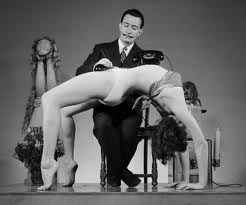
Salvador Dali - the very definition of surreal

Salvador Dali – the very definition of surreal

Salvador Dali was almost one of them, and here’s the amusing behind-the-scenes story.

Dali's theatrical "Mae West" room, recently exhibited at the Centre Pompidou in Paris

Dali’s theatrical “Mae West” room, recently exhibited at the Centre Pompidou in Paris

The Spanish-born Dali (1904-1989) is so famous for his surrealist works that his name has become short-hand for the term. (Check out the fantastical food imaginings of Catalan chef Ferran Adria, which led to his nickname “Salvador Dali of the kitchen.” An exhibit of his edible art renderings is currently on view at Somerset House, London, coming next to the Boston Science Museum.)

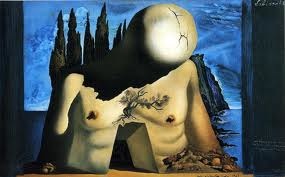
Dali's disconcerting painted backdrop for Massine's ballet Labyrinthe (1941)

Dali’s disconcerting painted backdrop for Massine’s ballet Labyrinth (1941)

Even 24 years after Dali’s death, a blockbuster retrospective of his work, first at the Pompidou Center in Paris and currently at the Museo Reina Sofia in Madrid, has broken all previous attendance records. The artist who once famously said, “I don’t do drugs. I am drugs,” never lacked for attention alive or dead. So it’s only natural that Dali’s theatrical public persona would have given rise to commissions for theatrical set design.

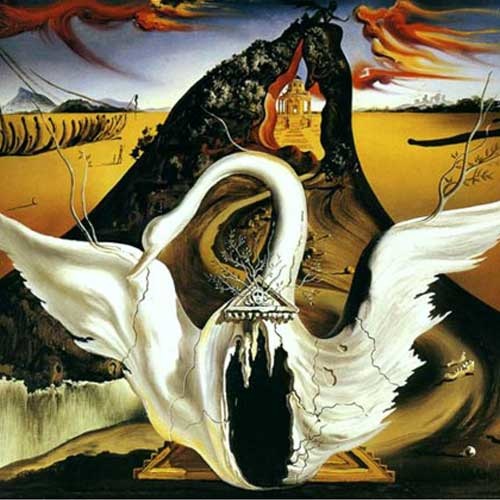
Dali's set for Massine's Bacchanale (1939). The dancers emerged from the swan's breast.

Dali’s set for Massine’s Bacchanale (1939). The dancers emerged from the hole in the swan’s breast.

In 1939, the ever-inventive choreographer Léonide Massine hired Dali to design the set and costumes for his one act ballet Bacchanale, set to music by Richard Wagner. As Jack Anderson writes in The One and Only: The Ballet Russe De Monte Carlo, “The season’s scandal was Bacchanale . . . Dali’s decor was dominated by a huge swan with a hole in its breast through which dancers emerge, some in remarkable costumes.

As Dali's Venus in Bacchanale, ballerina Nini Theilade appeared to be nude

As Dali’s Venus in Bacchanale, ballerina Nini Theilade appeared to be nude

 “There was a woman with a rose-colored fish-head. Lola Montez wore harem trousers and a hoop skirt covered in teeth. The Knight of Death turned out to be an immense perambulating umbrella.. . . Prudish audiences blushed to behold the male ensemble with large red lobsters (as sex symbols) on their thighs, and Nini Theilade, portraying Venus, created a sensation because she seemed totally nude. In actuality, she wore flesh-colored tights from her neck to her toes.”

As Dali’s contribution to Bacchanale made the only lasting impression in Massine’s less-than-stellar work, it only added to the artist’s legend. As the egotistical Dali once said of himself, “There are some days when I think I’m going to die from an overdose of satisfaction.”

The always amusing Salvador Dali

The always amusing Salvador Dali

But the great surprise in this tale is not that Massine continued to work with Dali, next on Labyrinth in 1941, but rather that the crazy Catalonian was hired by British choreographer Antony Tudor for his planned “intimate” new staging of Romeo & Juliet at Ballet Theatre (today’s American Ballet Theatre). Perhaps Tudor never heard Dali’s comment: “It is good taste, and good taste alone, that possesses the power to sterilize and is always the first handicap to any creative functioning.”

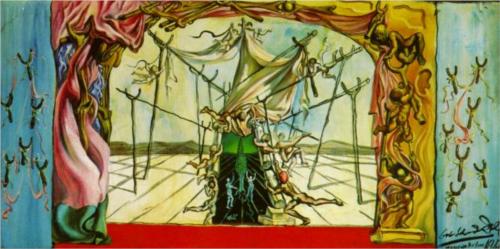
One of Dali's proposed "crutch-themed" set designs for Tudor's Romeo & Juliet.

One of Dali’s proposed “crutch-themed” set designs for Tudor’s Romeo & Juliet.

Alicia Markova was Tudor’s choice for Juliet and his choreographic muse. She laughingly remembered their meeting with Dali to view his proposed set designs. Crutches were everywhere to symbolize doomed love, but perhaps the most memorable suggestion was that the famous balcony be constructed as a giant set of false teeth (your sexual innuendo goes here) supported by gigantic sky-high crutches.

At Markova's suggestion, Botticelli's Primavera inspired the set/costume designs for Tudro's Romeo & Juliet (1943)

At Markova’s suggestion, Botticelli’s Primavera inspired the set/costume designs for Tudor’s Romeo & Juliet (1943)

Though Markova always wondered what Dali had in mind for her Juliet (perhaps a leg cast?) it was the ballerina herself who inspired the eventual design theme executed by the Russian Surrealist (and Neo-Romantic) Eugene Berman. At Sergei Diaghilev’s urging, the teenaged Markova had spent hour upon hour at the Uffizi Museum in Florence studying Renaissance art. As I wrote in The Making of Markova: “The way the female figures in the paintings held their hands in repose, and the subtle tilt of their heads were poses Markova later incorporated into her own delicate dance movements. 

Botticelli's central figure inspired Markova's Juliet costume

Botticelli’s central figure in Primavera inspired Markova’s Juliet costume

Markova and Hugh Laing in Romeo & Juliet, 1943

Markova and Hugh Laing in Romeo & Juliet, 1943

“Her favorite Renaissance artist was Sandro Botticelli, especially his euphoric Primavera. A rapturous work of tremendous scale, the well-known painting provided endless inspiration for the ballet’s saturated palette, costume detailing, and floral motifs.”

To capture the innocence of youth, Markova, aged 32 when she played the teenaged Juliet, had a red wig made to resemble the Botticelli beauty above. The ballerina won rave reviews for her portrayal. But the attention didn’t stop there. The attendant publicity for the much praised ballet caught the eye of several couturiers who immediately turned Markova’s diaphanous, empire-waist gowns into the next season’s big fashion trend.

Dali-inspired shoe hat by Elsa Schiaparelli

Dali-inspired shoe hat by Elsa Schiaparelli

Dali's surrealist jewlery

Dali’s surrealist jewlery

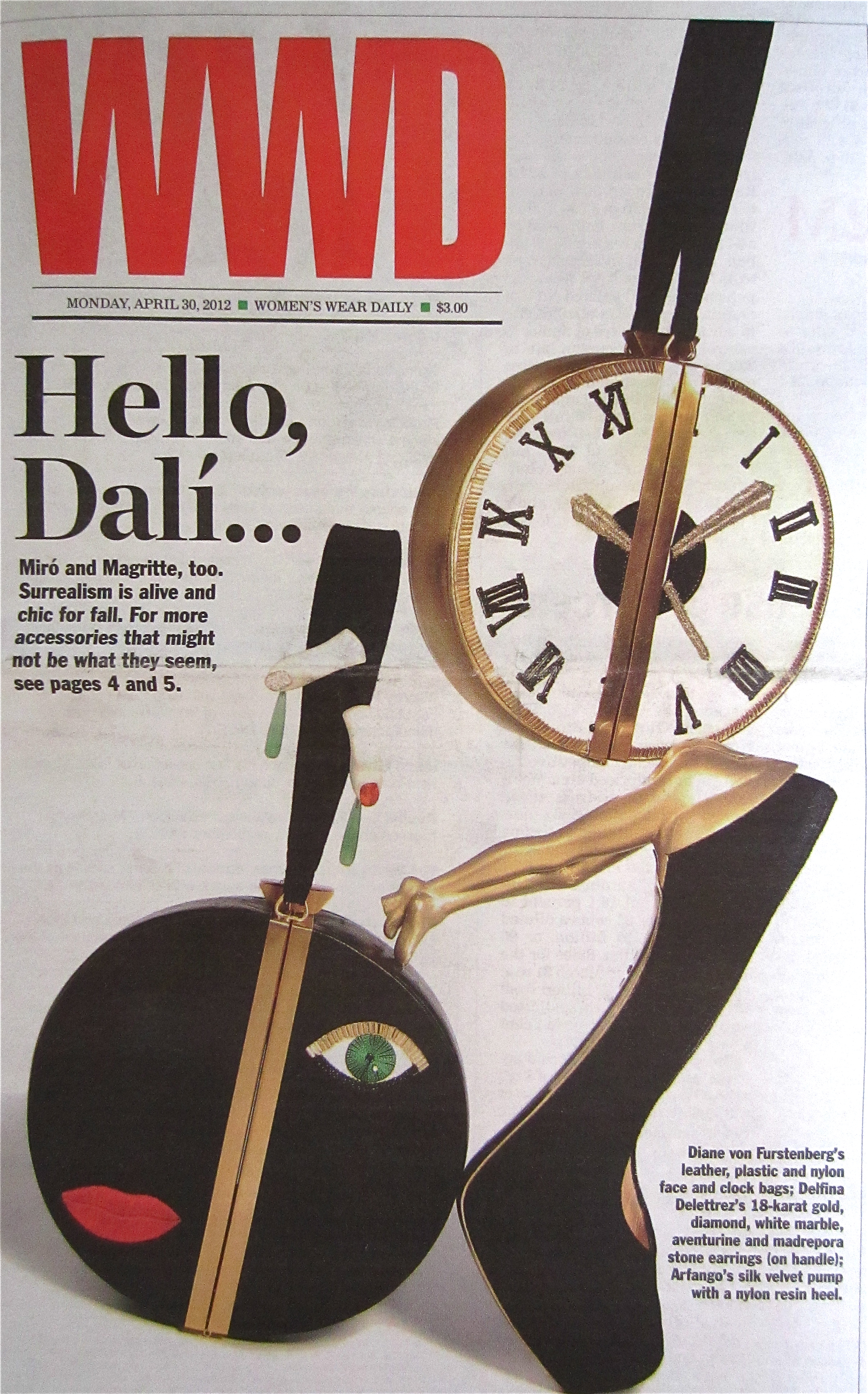
Who knows what trends Dali’s Romeo & Juliet might have inspired? He collaborated with great friend and couturier Elsa Schiaparelli on her infamous shoe hat and lips-pocket suit seen here. And Dali’s own Surrealist jewelry designs – weeping eyes with clock-dial pupils and Mae West’s sexy smile in rubies and pearls – still fetch great sums at auction.IMG_2173

More recently, Women’s Wear Dali (I mean Daily) noted the artist’s continued influence on fashion accessories. Perhaps if Dali’s Romeo & Juliet designs had been used, stylish crutches would have hobbled down runways – something quite useful when wearing today’s sky-high stilettos, don’t you think?

Share this:

  • Tweet
  • Email a link to a friend (Opens in new window) Email
  • More
  • Share on Tumblr
Like Loading...

Tulles of the Trade: lifting the veil on ballet costume design

30 Tuesday Jul 2013

Posted by Tina Sutton in Uncategorized

≈ Leave a comment

Tags

Alexander McQueen, Alicia Markova, Anna Pavlova, ballet costumes, ballet fashion, British ballet, de Young Museum, Giambattista Valli, Leonide Massine, Madame Manya, Marie Rambert, Rambert's Ballet Club, Rudolf Nureyev, Sarah Kaufman, Stanley Judson, tutu construction

Markova considered the right tulle as important as toe shoes

Markova considered the right tulle as important as toe shoes

In the close to 10 years I’ve been writing about fashion trends for The Boston Globe, I don’t think a year has gone by without a runway show influenced by the ballet. Those dreamy gossamer fabrics and figure-enhancing silhouettes are catnip to both designers and the their amply-funded clientele.

While researching The Making of Markova, I learned a great deal about the fascinating intricacies of ballet costumes. To enraptured audiences, the legendary ballerina seemed to float effortlessly in the air – her tutu as featherweight as the dancer herself. That combination of otherworldliness, fragility, and seductive transparency – now you see flesh, now you don’t! – has inspired countless fashion interpretations over the years, from breathlessly romantic to rather scandalously modern.

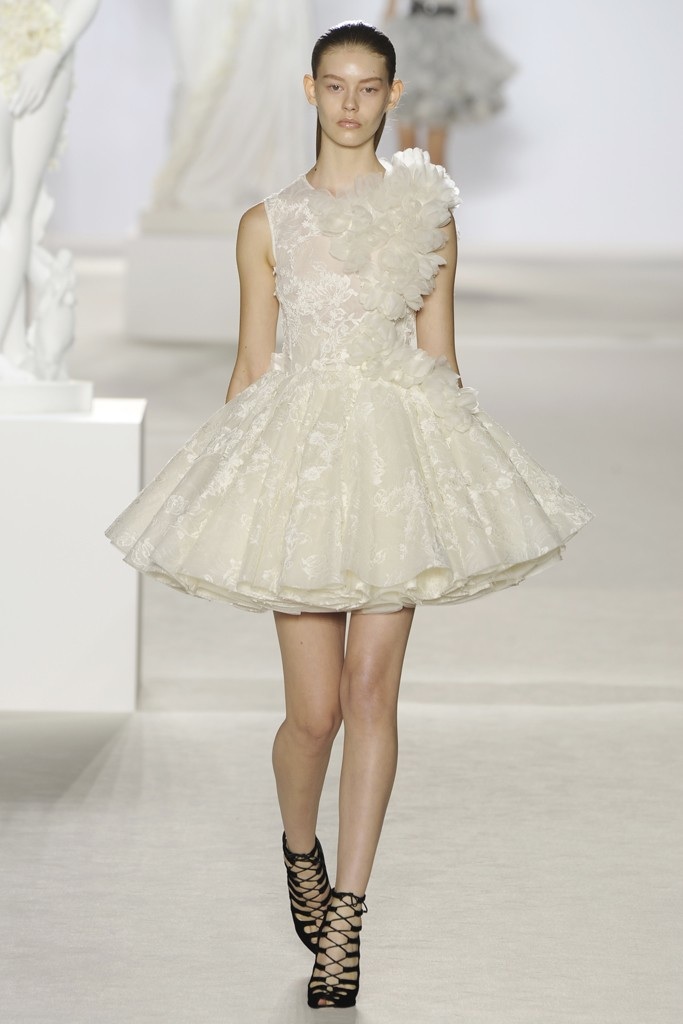
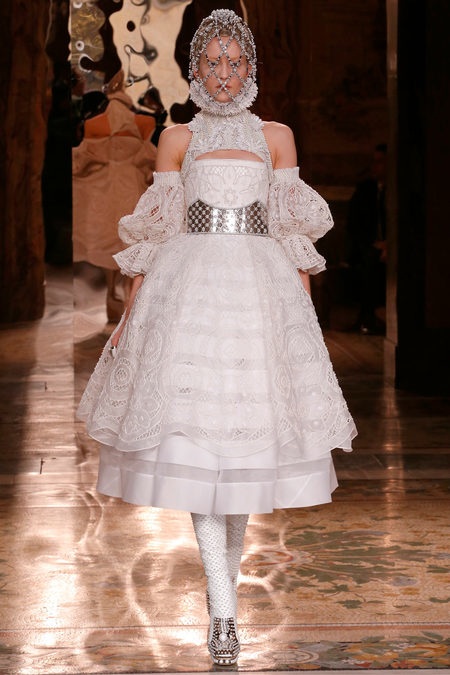
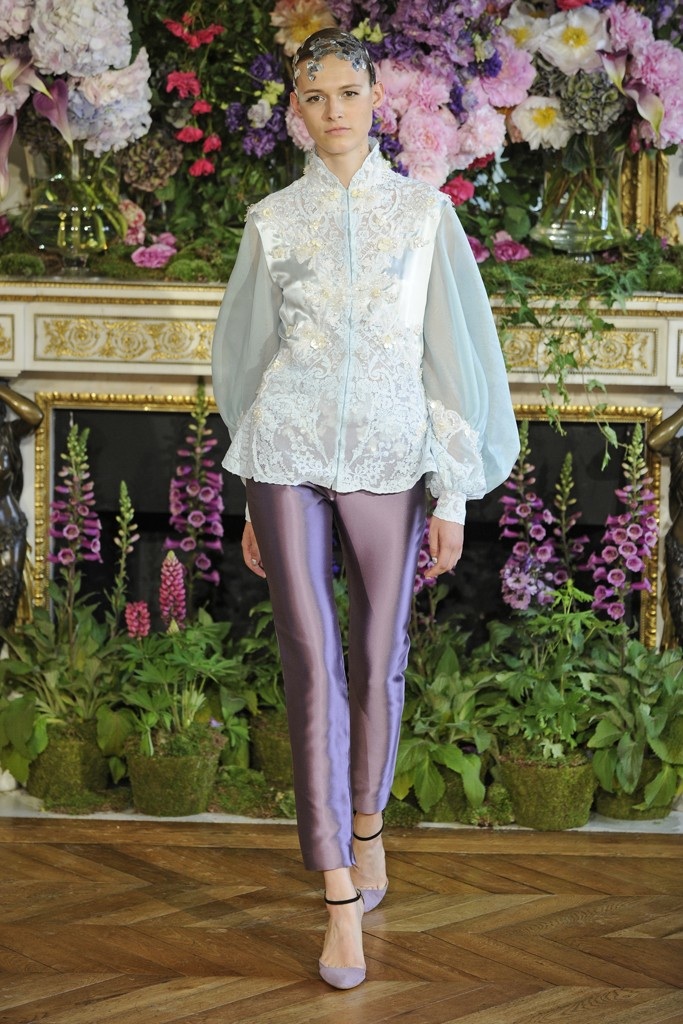
Fall 2013 is no exception. Numerous collections incorporate ballet design elements in show-stopping evening wear, with corset tops, short flounces, veiled headpieces, transparent armlets, and multi-tiered pouf skirts plentiful.

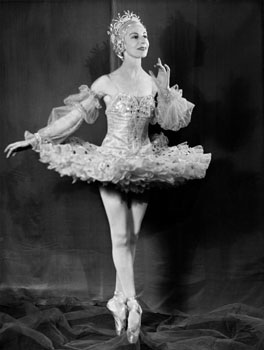
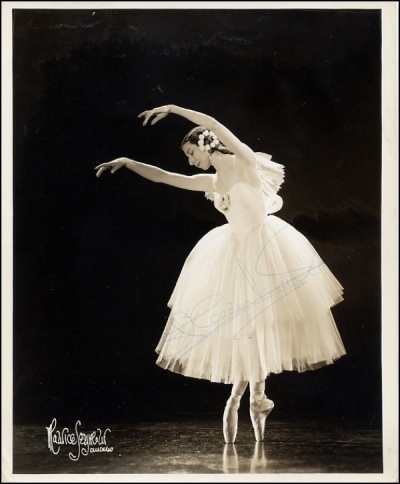
Markova as the Sugar Plum Fairy

Markova as the Sugar Plum Fairy in The Nutcracker Suite, 1950

Tutu-like couture. Giambattista Valli, Fall 2013

Tutu-like couture. Giambattista Valli, Fall 2013

Ballet-inspired fashion Alexander McQueen Fall 2013

Ballet-inspired fashion. Alexander McQueen, Fall 2013

Markova as the otherworldly spirit of Giselle (1939)

Markova as the otherworldly spirit of Giselle (1939)

But as costly and elaborate as those designer gowns may be, they pale in comparison to the complexity of classical ballet costumes. First is the issue of fabric choice. A form-fitting corset of lustrous satin might look magnificent but can also cause a ballerina to slip from her partners hands during a lift. Markova sometimes had two different tops made for the same skirt (at her own expense, I might add): shiny satin for important press photos, and a matte version to perform in. Textured silk taffeta can present a different problem, especially in a layered full skirt. Markova laughingly remembered a corps of taffeta-clad ballerinas rustling so loudly that they could no longer hear their music cues! And then there’s ornamentation. Every sequin, silk flower, and bead needs to be hand-sewn and carefully fastened tight. If one were to fall on the stage during a performance, a dancer could easily slip and injure her foot.

There are 34 yards of fabric in this ethereal ballet skirt.  Markova and Anton Dolin in Gislle.

This ballet skirt required 34 yards of fabric! Markova with Anton Dolin in Giselle.

But most complicated of all is proper tutu construction, truly an architectural marvel. There are 34 yards of net in each traditional ballet skirt like the one at left, and 18 yards in a short tutu. For each skirt, Madame Manya, Markova’s longtime costume designer (and Anna Pavlova’s before her), created nine different layers of tarlatan (a kind of muslin) topped with several more of diaphanous tulle. In between, a crinoline hoop was carefully hidden between the folds to give the skirt body without stiffness. Before the days of beautiful man-made materials, the fabric costs for ballet costumes could be exorbitant and beyond the budget of fledgling companies. That was the case when Markova pioneered British ballet in the early 1930s, dancing at one of the first London-based companies, the Ballet Club.

Budget fabrics lack ethereality. Markova, left In Foyer de Danse, )Ballet Club (1932

Budget fabrics lacked an ethereality on stage, said Markova, seen here at left in Frederick Ashton’s Foyer de Danse at the fledgling British company Ballet Club (1932)

Its founder was ex-Ballets Russes dancer/teacher Marie Rambert, who formed a combined school and performing troupe. One of Rambert’s money-saving tricks was to buy the cheapest tarlatan material she could find for the tutu underskirts, and then add just a single top layer of fine tulle. That might have fooled the audience, but the under layers itched the dancers like crazy!

Markova lamented that cheap fabrics cheated the audience, as they took away from the magical, dreamlike quality of ballet. Whenever she could afford it, she used her own money to buy quality fabrics so her costumes would look more luxurious and ethereal. In the early days, she hand-sewed the elaborate skirts herself (a talent she quickly mastered), later turning to experts like Manya when her salary improved. After Markova became famous – and well-paid – she insisted upon buying beautifully-made costumes for other dancers as well, as she once did for an entire ballet company in financial trouble.

Léonide Massine masked his problematic bowed legs with pants or knickers

Léonide Massine masked his problematic bowed legs with pants or knickers

While Markova’s main concern with costuming was to create a transportive illusion for the audience, many male soloists were driven more by personal vanity. The inventive dancer/choreographer Léonide Massine was bowlegged, not ideal for a male ballet star. Given that Massine’s strength was not in classical roles, but rather in showy character-driven parts (which he often created for himself), he was able to avoid second-skin tights, opting instead for camouflaging knickers and pants.

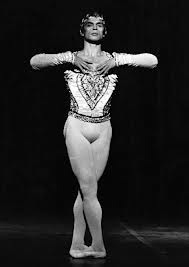
Rudolf Nureyev had his costume jackets cut short to make his muscular legs look longer

Rudolf Nureyev had his costume jackets cut short to make his muscular legs look longer

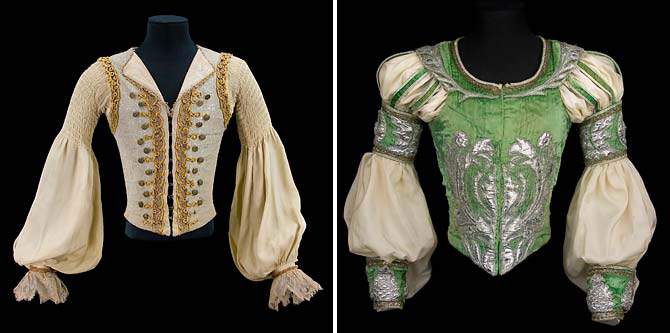
On the other hand (or foot), there was absolutely nothing wrong with the legs of Rudolf Nureyev, considered one of the greatest male ballet dancers of the 20th century. Many of the celebrated star’s costumes were recently on view at the de Young Museum in San Francisco.

Rudolf Nureyev's costumes  (de Young Museum in San Francisco)

Nureyev’s regal costume bodices (de Young Museum in San Francisco)

“He made it [ballet] sexier and more electrifying,” wrote Sarah Kaufman of the Washington Post in her review of the de Young Museum exhibit Rudolf Nureyev: A Life in Dance. “Nureyev’s costumes could have been a fantasy king’s couture, made to measure for an extraordinary slim waist and broad shoulders in silk, velvet and lace. As Cary Grant was with his suits and shirts – sending them back for fractional faults – so was the sharp-eyed ballet star with his stage attire.”

Markova and partner Stanley Judson in The Nutcracker, 1934

Markova and partner Stanley Judson in The Nutcracker, 1934

Russian-dance inspired Paris couture Alexis Mabille, Fall 2013

Russian-dance inspired Paris couture Alexis Mabille, Fall 2013

Interestingly, the elaborate ballet costumes of male soloists (see Markova’s partner Stanley Judson above left) also inspired Paris couture fashions this fall. The outfit, however, was for a woman.

Share this:

  • Tweet
  • Email a link to a friend (Opens in new window) Email
  • More
  • Share on Tumblr
Like Loading...

Unmasking Markova: The first peek into her personal archives

08 Monday Jul 2013

Posted by Tina Sutton in Uncategorized

≈ Leave a comment

Tags

Alicia Markova, Ballet Headpieces, Ballets Russes, Boston University, Henri Matisse, Howard Gotlieb Archival Research Center, Sergei Diaghilev, Stage Door Canteen, WWII rations

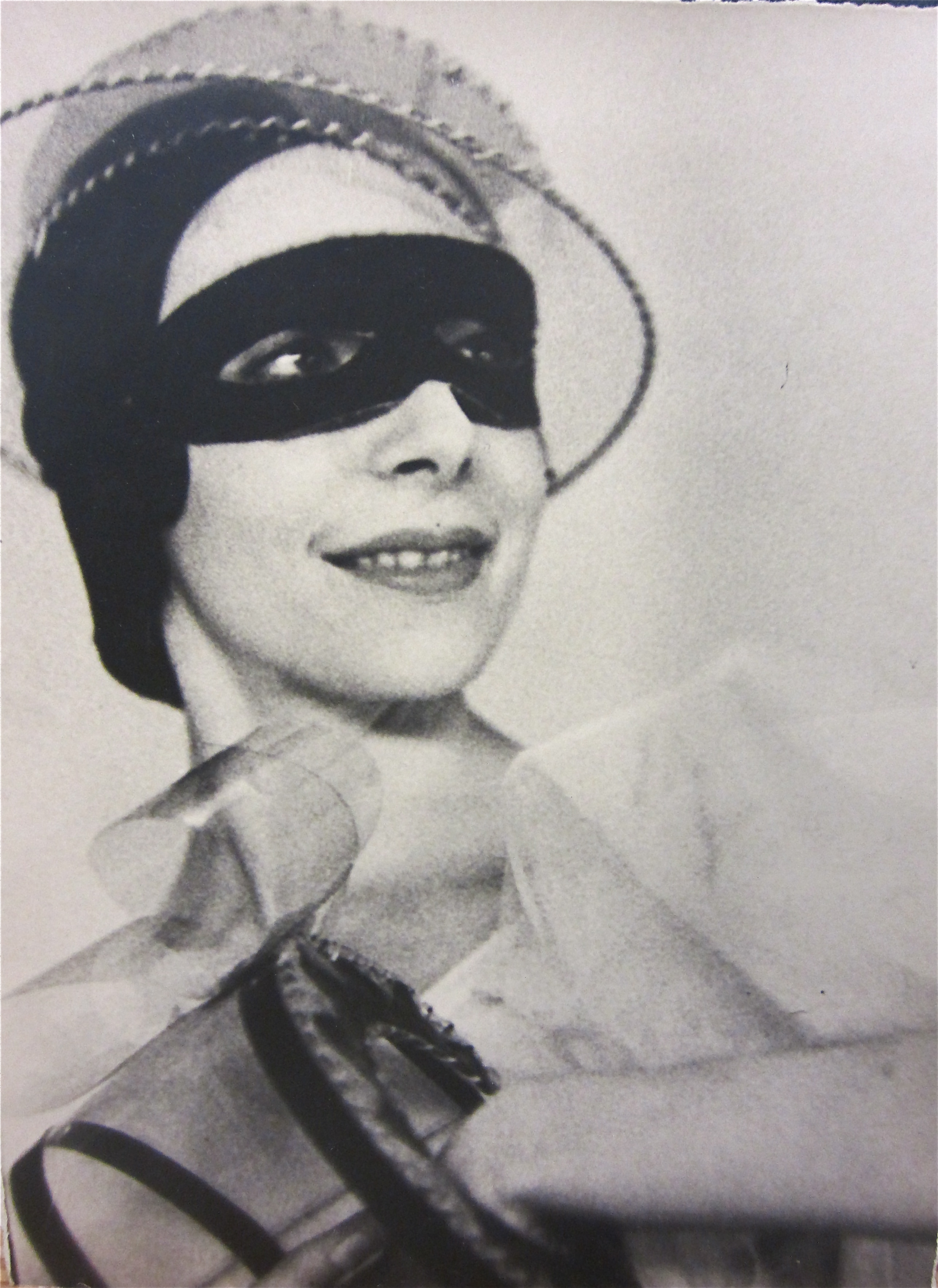
Markova in Les Masques (1933)

Markova in Les Masques (1933)

Alicia Markova was a pack rat. The woman saved everything, from costume invoices and injury X-rays to rare music scores and her first evening gown. (It was Lanvin – a gift.) And then there were the letters: file upon file overflowing with a lifetime of correspondence from famous (and infamous) dancers and choreographers, ardent fans, and some of the greatest creative artists of her day.

While I was writing my biography of the ballet legend, many of those letters proved revelatory, but so did countless other objects, professional materials, and extraordinary photographs (see below) that are part of the Alicia Markova Collection entrusted to the Howard Gotlieb Archival Research Center at Boston University.

Markova in Hollywood (1945) © John E. Reed

Markova in Hollywood (1945) © John E. Reed

At 14, Markova was the youngest -ever dancer the Ballets Russes (1925)

At 14, Markova was the youngest-ever dancer at the Ballets Russes (1925)

Though I was privileged to be the first person given access to Markova’s treasure trove of personal memorabilia, many illuminating items from those archives are now on public view for the first time in the Gotlieb Memorial Gallery on the first floor of Mugar Memorial Library on the Boston University campus (July through November 2013).

For me, assisting the Gotlieb’s resident artist and exhibition wizard Perry Barton was a fond reminder of the lengthy, yet rewarding process of organizing the vast collection. It was such a joy to suddenly discover a long-hidden gem. One of my most cherished “finds,” now on exhibit, is an original Matisse pencil self-portrait given to Markova during her Ballets Russes days.

As you can tell from the photo above, Lilian Alicia Marks was just a child when Sergei Diaghilev invited her to join his illustrious company. She was so much younger, smaller, and less worldly than all the other dancers that the older artistic geniuses in her midst took little Alicia under their collective wings.

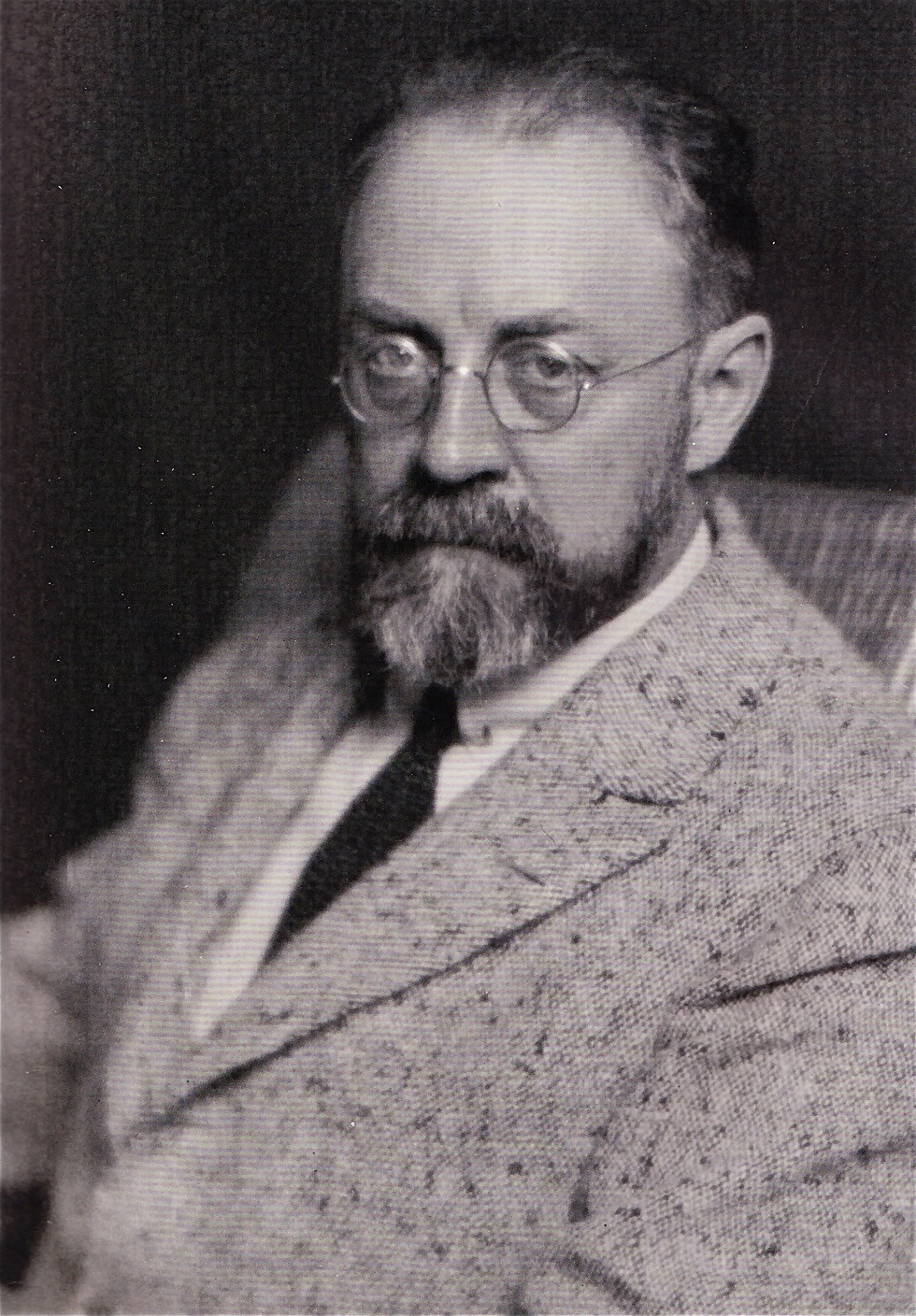
Matisse self-portrait

Matisse self-portrait

To Markova, he was "Uncle" Henri Matisse (1925) at the Ballets Russes

“Uncle Henri” Matisse (1925) at the Ballets Russes

The 56-year-old Henri Matisse was completely enchanted by the sweet, shy girl who called him “Uncle Henri.” In addition to designing the costume for her first major role, the groundbreaking painter took the time to teach Markova about modern art. Alicia was a very serious, earnest pupil, and perhaps to amuse her one day, Matisse sketched a humorous self-portrait (similar to the one at right), which he then initialed and presented to her. The grateful student then folded it in half and carefully placed it inside one of her Ballets Russes programs for safekeeping. There it remained until I discovered it over eight decades later.

Markova had many amazing headpieces. From Cimarosiana, 1927.

Markova had many amazing headpieces. From Cimarosiana, 1927.

Reading Markova’s journals made me look at many of her keepsakes in rather different ways. For example, the legendary ballerina saved many exquisite headpieces, several of which she made herself. They were all carefully wrapped in tissue paper, something she did before and after every performance. One in particular appeared rather scruffy inside, and I later discovered why.

Markova kept her headpieces in place with glue!

Markova kept her headpieces in place with glue!

When Markova was at the Ballets Russes, her hair was in the page boy style of a young girl, as seen above left. Diaghilev insisted she wear a headband on stage to keep it neatly in place until long enough to smooth into a dancer’s bun. During one of her astounding spin combinations one evening, the headband flew off, eventually encircling her neck like a hula hoop. Though Diaghilev was impressed that she continued to dance impeccably, he warned her it must never happen again. From then on, Markova actually glued her headpieces on. Though it was a special, non-permanent glue, it still managed to grab hair and skin upon removal, remnants of which were clearly visible inside a feathered crown I unwrapped (similar to the one above). Lucky for Markova, she had a thick head of hair.

Markova volunteered at the Stage Door Canteen throughout WWII

Markova volunteered at the Stage Door Canteen throughout WWII

Though Markova’s archives contain many priceless, historic items, my favorite was much more personal. It was a tiny pale pink leather pouch. From the contents (which included hernia clips and a removable tooth bridge!) it was clear the ballerina carried it with her everywhere while dancing across the United States in the late ’30s and ’40s. Also inside was a war ration book dated 6/21/43. I later learned Markova used the bulk of her weekly rations to buy goods that were impossible to procure in England during the war, sending weekly care packages to her family and friends in London. A small black and white photo of Markova’s mother and sisters was attached to the ration book.

Share this:

  • Tweet
  • Email a link to a friend (Opens in new window) Email
  • More
  • Share on Tumblr
Like Loading...

Alicia in Wonderland: Markova at the Ballets Russes

18 Tuesday Jun 2013

Posted by Tina Sutton in Uncategorized

≈ Leave a comment

Tags

Alexandra Danilova, Alicia Markova, Coco Chanel, de Chirico, Diaghilev and the Ballets Russes, George Balanchine, Howard Gotlieb Archival Research Center, Igor Stravinsky, Jane Pritchard, Léon Bakst, Man Ray, Matisse, Michel Fokine, Picasso, Sergei Diaghilev

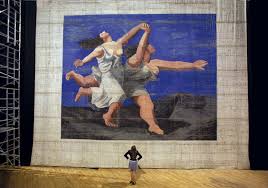
Picasso's startling 34-foot front curtain for Le Train Bleu (1924)

Picasso’s startling 34-foot front curtain for Le Train Bleu (1924)

Anyone even marginally interested in ballet, art, or fashion should head to Washington D.C. this summer for the knock-out blockbuster exhibit “Diaghilev and the Ballets Russes, 1909-1929: When Art Danced with Music” at the National Gallery of Art. Adapted from a stellar 2010 exhibition at London’s Victoria & Albert Museum (curated by Jane Pritchard), the wildly colorful, entertaining, and often astonishing show celebrates one of the most innovative dance companies of all times. As the National Gallery explains, the Ballets Russes “propelled the performing arts to new heights through groundbreaking collaborations between artists, composers, choreographers, dancers, and fashion designers,” an unheard of phenomenon in the early 20th century.

Léon Bakst costumes for Fokine's Daphnis and Chloé (1912) © Victoria & Albert Museum, London

Léon Bakst costumes for Fokine’s Daphnis and Chloé (1912) © Victoria & Albert Museum, London

Sergei Diaghilev

Sergei Diaghilev

It was visionary Russian impresario Sergei Diaghilev who brought together a Who’s Who of creative geniuses – Nijinsky, Pavlova, Picasso, Matisse, Man Ray, Bakst, Fokine, Stravinsky, Cocteau, Chanel, and countless others – creating nothing less than an aesthetic firestorm that electrified the world. The youngest-ever member and soloist of this illustrious company was 14-year-old Lilian Alicia Marks. Though known to dislike children, Diaghilev developed a close bond with the frail British dance prodigy after first seeing her perform as a 10-year-old.
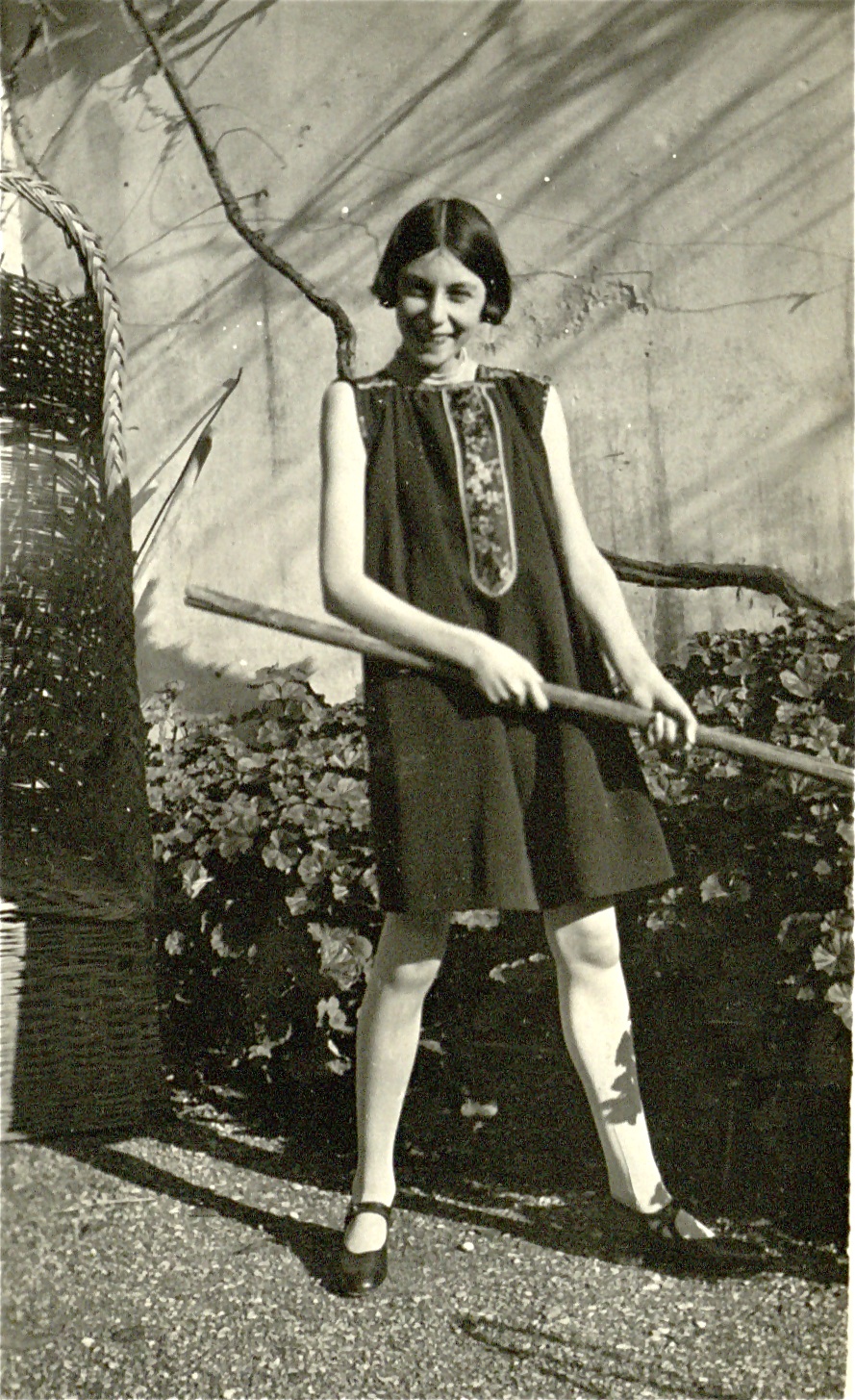
A very youthful 14-year-old Markova at the Ballets Russes

A very youthful 14-year-old Markova at the Ballets Russes

Surprising everyone, Diaghilev became a father figure to the earnest, painfully shy girl, whisking her away from foggy London to sun-drenched Monte Carlo, home of the famed Ballets Russes. There Diaghilev renamed his “little daughter” (as he fondly called her) Alicia Markova, and began her fairy-tale education. “Uncle Igor” Strainvinsky was Markova’s music instructor, Matisse and Picasso taught her about modern art, and she learned about fashion from none other than Coco Chanel.

"To my dear little thing," Balanchine wrote to Markova

“To my dear little thing,” Balanchine wrote to Markova

Also joining the company in 1924 was the untested, up-and-coming choreographer George Balanchine. Because of Markova’s astounding technique – able to do many jumps and spins formerly only performed by men – Balanchine selected the practically mute teenager to star in his first ballet for Diaghilev: Le Chant du Rossignol (The Song of The Nightingale). It would be a huge success for them both, with Balanchine on his way to becoming the most influential choreographer of the 20th century, and Markova a future world famous prima ballerina. The Nightingale introduced Balanchine’s never-before-seen modern balletic stylings and Markova’s ability to effortlessly float and fly like a bird.
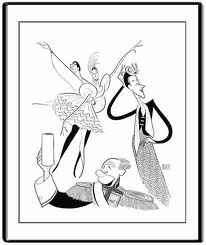
Markova in a Matisse-designed costume for The Nightingale (1925)

Markova in a Matisse-designed costume for The Song of the Nightingale (1927)

The photo above shows Markova in a Matisse-designed costume for the ballet, but it wasn’t the original one she wore for the 1925 premiere. While Alicia had been picturing a brown-feathered tutu for the role of a tiny bird, Matisse had other ideas, as the ballerina reminisces in The Making of Markova: “Listen little one,” Matisse was saying, “white silk tights all over, then white satin ballet shoes, large diamond [rhinestone] bracelets around both ankles, the wrist of one arm, and the other just here above the elbow, a little white bonnet like a baby’s and no hair to show. Please dear remember, no hair.”

Henri Matisse designed iconic costumes for Markova throughout her career

For Rouge et Noir (1939), Henri Matisse designed another iconic costume for Markova

For the first time in ballet history, a ballerina appeared on stage wearing nothing but a second-skin leotard, and in white georgette, the teenaged Markova looked practically nude! She was so tiny and under-developed for her age, however, that the 14-year-old looked anything but vulgar, completely charming the French audiences. England was another story, however. When the Lord Chamberlain got wind of the “risqué” costume, he banned London’s own little Alicia from wearing it on stage. Matisse saved the day by designing a white chiffon tunic and pants (as seen in the photo above) so the show could go on.

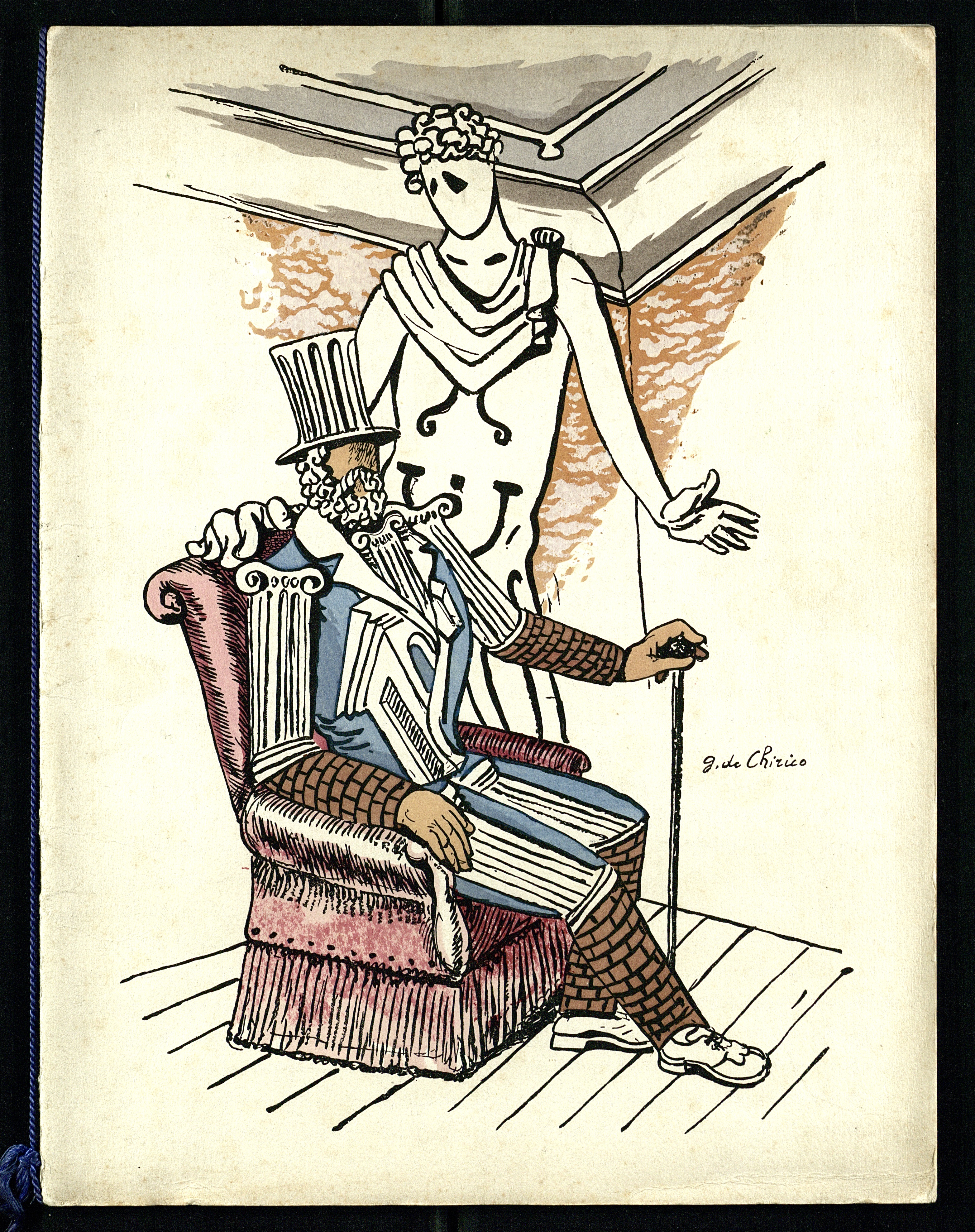
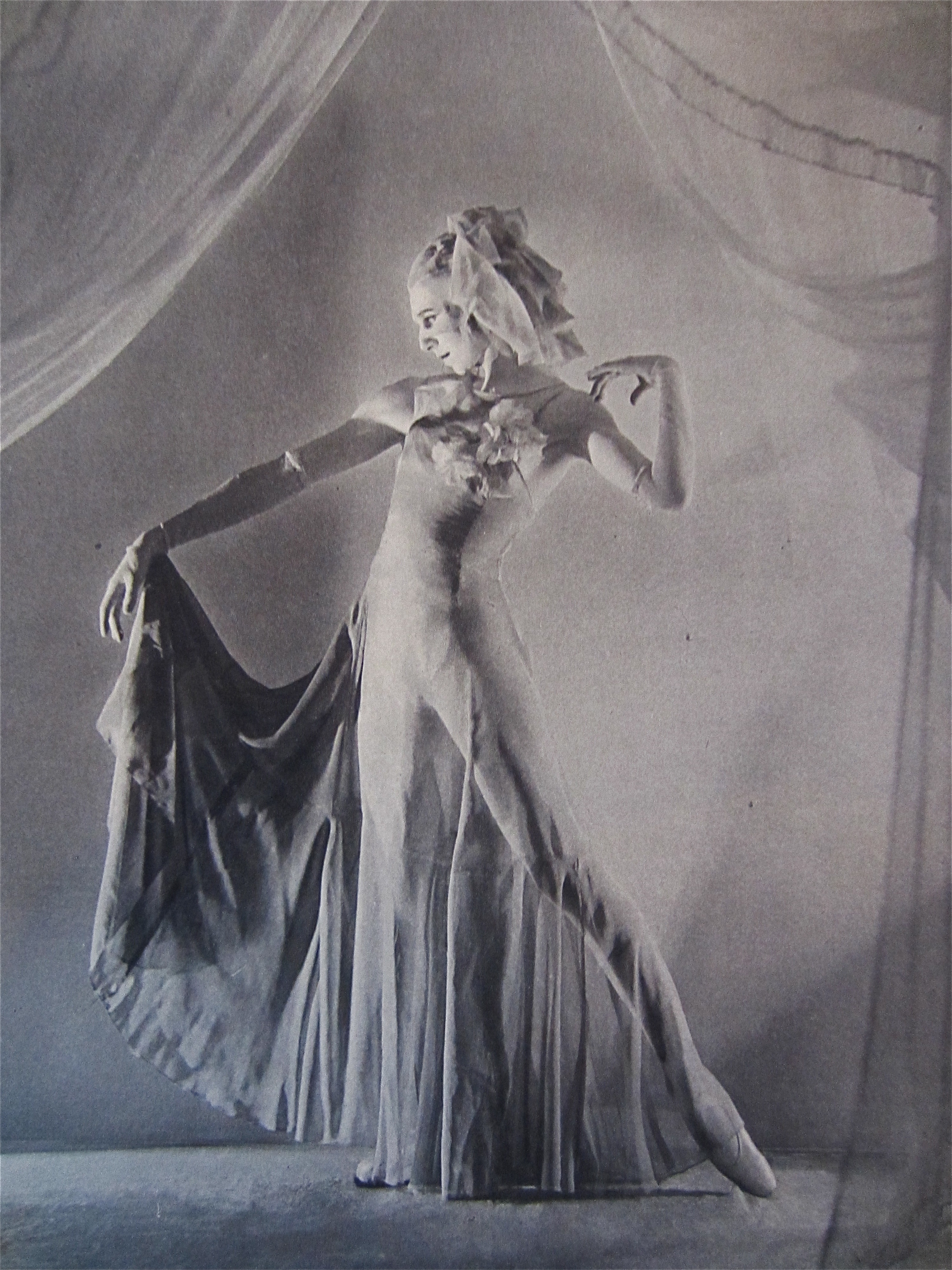
AM in Le Bal

1929 Ballets Russes program with cover by Giorgio de Chirico illstrating his costume designs for Le Bal. (Part of The Making of Markov exhibit currently on view at the Howard Gotlieb Archival Research Center at Boston University.

1929 Ballets Russes program with cover by Giorgio de Chirico illustrating his costume designs for Le Bal (1929), such as the one worn by Markova seen here

Markova saved all the glorious Ballets Russes programs from her magical time with the company. Cover illustrations, costume designs, and photographs were created by the likes of Picasso, Derain, de Chirico, Braque, Miro, and Man Ray among others. They are part of the vast Alicia Markova Collection at the Howard Gotlieb Archival Research Center at Boston University and will be on view with other personal memorabilia belonging to the legendary ballerina from July through November 2013. The Making of Markova exhibit is free and open to the public in the Gotlieb Memorial Gallery on the first floor of the Mugar Memorial Library at Boston University.

A Man Ray photo of Markova in La Chatte (1927)

A Man Ray photo of Markova in La Chatte (1927)

The five years Markova spent at the Ballets Russes were the most influential of her career. In addition to being trained by the unquestioned creative superstars of her day, she met many dancers, choreographers, composers, and artists who became lifelong friends and colleagues. Seven years older than Markova, Alexandra Danilova was both Balanchine’s lover and a protective big sister to the timid dancer when they met. Two of the greatest ballerinas of their generation, the pair would be one another’s confidante, playmate, teacher and supporter for seven decades. Markova was eternally grateful to the man who that made all of that possible – the incomparable Sergei Diaghilev

Markova's best friend, the exquisite ballerina Alexandra Danilova, and her future bête-noir, Serge Lifar in Appolon musagète (1928) with costumes by Coco Chanel.

The exquisite Alexandra Danilova, Markova’s dearest friend, dancing with the egotistical Serge Lifar (Markova’s future bête-noir) in the Ballets Russes production of Appolon musagète (1928) with costumes by Coco Chanel.

Share this:

  • Tweet
  • Email a link to a friend (Opens in new window) Email
  • More
  • Share on Tumblr
Like Loading...

Nose Job? No Way!

06 Thursday Jun 2013

Posted by Tina Sutton in Uncategorized

≈ 1 Comment

Tags

Alexandra Danilova, Alicia Markova, Anna Pavlova, Anton Dolin, Barbra Streisand, Frederick Ashton, Frederick Franklin, Kate Middleton, Margot Fonteyn, nose job, Sol Hurok

Markova's distinctive profile © John Rawlings

Markova’s distinctive profile © Rawling

“A rose is a rose is a rose is a rose” wrote Gertrude Stein. Can the same be said for a nose? Each is special – speaking to family and heritage, yet the same – in function and placement. Then why are so many people anxious to change theirs?

June is one of the most popular months for nose jobs. Students have the entire summer for post-surgery recuperation and time to get used to a new face.

Kate Middleton: nose de jour

Kate Middleton: nose de jour

According to Time magazine, “women in New York are reportedly paying $12,000 for nose jobs to make themselves look like Kate Middleton; one surgeon estimated he has already performed 100 such royal rhinoplasties.” But is “Middleton of the road,” really the way to go?

The glorious Barbra Streisand

The glorious Streisand profile

Many world-famous celebrities were pressured to have their noses “fixed,” most often so they would appear less ethnic. Barbra Streisand may be the most famous in that regard. (As a child, I was actually briefly related to Ms. Streisand when she was married to my cousin Eliott Gould. I thought her quite stunning – and riotously funny.) When asked why she never had her prominent nose altered, Streisand said it was a combination of worry it wouldn’t be done correctly – she would have left the bump and just slightly shortened the tip, and fear that it might change her singing voice – clearly a catastrophe!
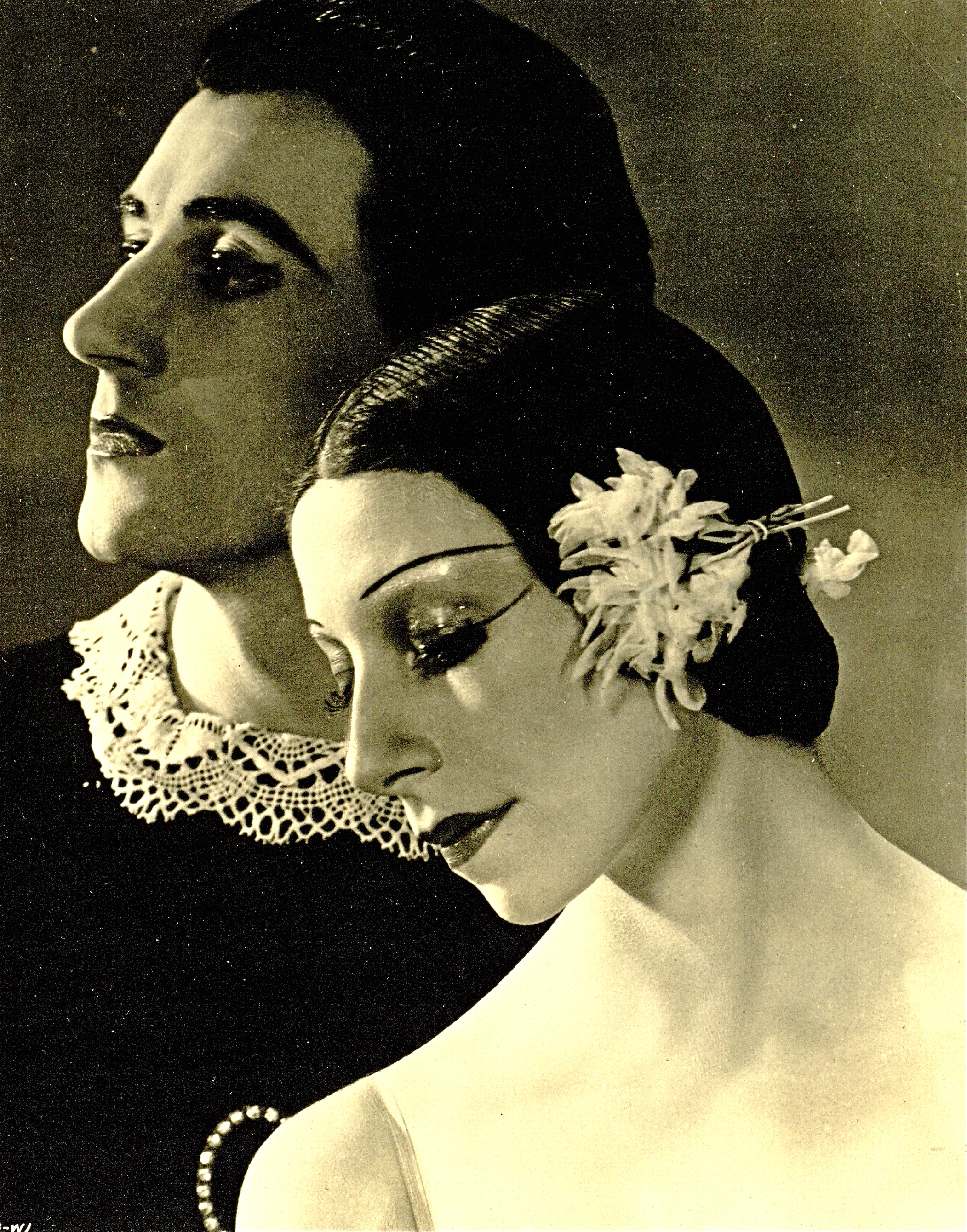
Markova's partner Anton Dolin pressured her to have her nose "fixed."

Markova was pressured her to have her nose “fixed” by partner Anton Dolin

Alicia Markova was continuously pressured to have her own distinctive nose fixed, a suggestion she always politely turned down. Dance partner Anton Dolin, choreographer Frederick Ashton, and impresario Sol Hurok all feared the ballerina’s “looking Jewish” would damage her career in times of rampant anti-Semitism during the 1930s and ’40s; and indeed, Markova would have to battle insidious prejudices in her early years. But she was also fiercely proud of her religion and heritage, becoming the first openly Jewish classical prima ballerina in history. I write “openly,” because Anna Pavlova was Jewish but hid that fact for fear it would ruin her career. (Jews weren’t allowed to attend the Maryinsky Ballet School in St. Petersburg where Pavlova trained).

Margot Fonteyn's nose pre-surgery

Margot Fonteyn’s nose pre-surgery

In stark contrast to Markova, the very pretty, and very Catholic, prima ballerina Margot Fonteyn immediately had a nose job – unfortunately initially botched – upon being told she looked a “little Jewish” by choreographer Roland Petit. As you can see in the photo at left, she was quite lovely pre-surgery.

Alexandra Danilova's nose cost her a film role.

Alexandra Danilova’s nose cost her a film role.

Alexandra Danilova's million dollar legs

Alexandra Danilova’s million dollar legs

Markova’s lifelong best friend was the delightfully effervescent Russian prima ballerina Alexandra Danilova, known for having the most beautiful legs in ballet – New York City Ballet Director Lincoln Kirstein likened them to “luminous wax”. Though a remarkable  and enormously popular dancer, Danilova lost a coveted Hollywood film role because of her nose, as explained by Leslie Norton in her biography of Danilova’s frequent dance partner Frederick Franklin, who sadly passed away just last month at the age of 98. The movie was based on Léonide Massine’s Gaîté Parisienne, one of Danilova’s signature ballets, but the director of The Gay Parisian (1941), Jean Negulesco, said he didn’t like the tilt of Danilova’s nose. “My nose doesn’t dance!” she snapped back.

Markova agreed. Her nose was her nose was her nose. The Jewish ballerina’s prodigious talent and mesmerizing stage presence handily won over critics and audiences alike, with her dramatic profile actually adding a haunting beauty to many of her roles (as seen below). Markova and Danilova would have the last laugh (The Gay Parisian film was a flop), becoming two of the best-loved dancers of their generation.

One of my favorite Markova stories was when she was working at the Metropolitan Opera in New York. She got her heel caught in a metal grate and in the few seconds she was falling to the ground, thought of all the men who had pestered her to have her nose fixed, and now she was about to break it. So what did she do? Turn the other cheek – which she broke – to save that beloved, oft-disparaged nose.

Markova looked haunting in The Haunted Ballroom © Gordon Anthony

Markova looked haunting in The Haunted Ballroom  © Gordon Anthony

Share this:

  • Tweet
  • Email a link to a friend (Opens in new window) Email
  • More
  • Share on Tumblr
Like Loading...
← Older posts

Order on Amazon

  • Order from Barnes & Noble
  • Order from IndieBound
    • Write to Tina

    Archives

    • October 2014
    • August 2014
    • June 2014
    • May 2014
    • April 2014
    • March 2014
    • February 2014
    • January 2014
    • December 2013
    • November 2013
    • October 2013
    • September 2013
    • August 2013
    • July 2013
    • June 2013
    • May 2013
    • April 2013
    • March 2013

    Enter your email address to follow this blog and receive notifications of new posts by email.

    Join 33 other subscribers

    Blog at WordPress.com.

    • Subscribe Subscribed
      • The Making of Markova
      • Join 33 other subscribers
      • Already have a WordPress.com account? Log in now.
      • The Making of Markova
      • Subscribe Subscribed
      • Sign up
      • Log in
      • Report this content
      • View site in Reader
      • Manage subscriptions
      • Collapse this bar
     

    Loading Comments...
     

      %d